
+11% rides per
user in Brazil
Driving cashless growth through Pix, Brazil's most popular payment method.
I design complex products end to end, connecting user needs, business logic and local market realities into products that scale
Driving cashless growth through Pix, Brazil's most popular payment method.

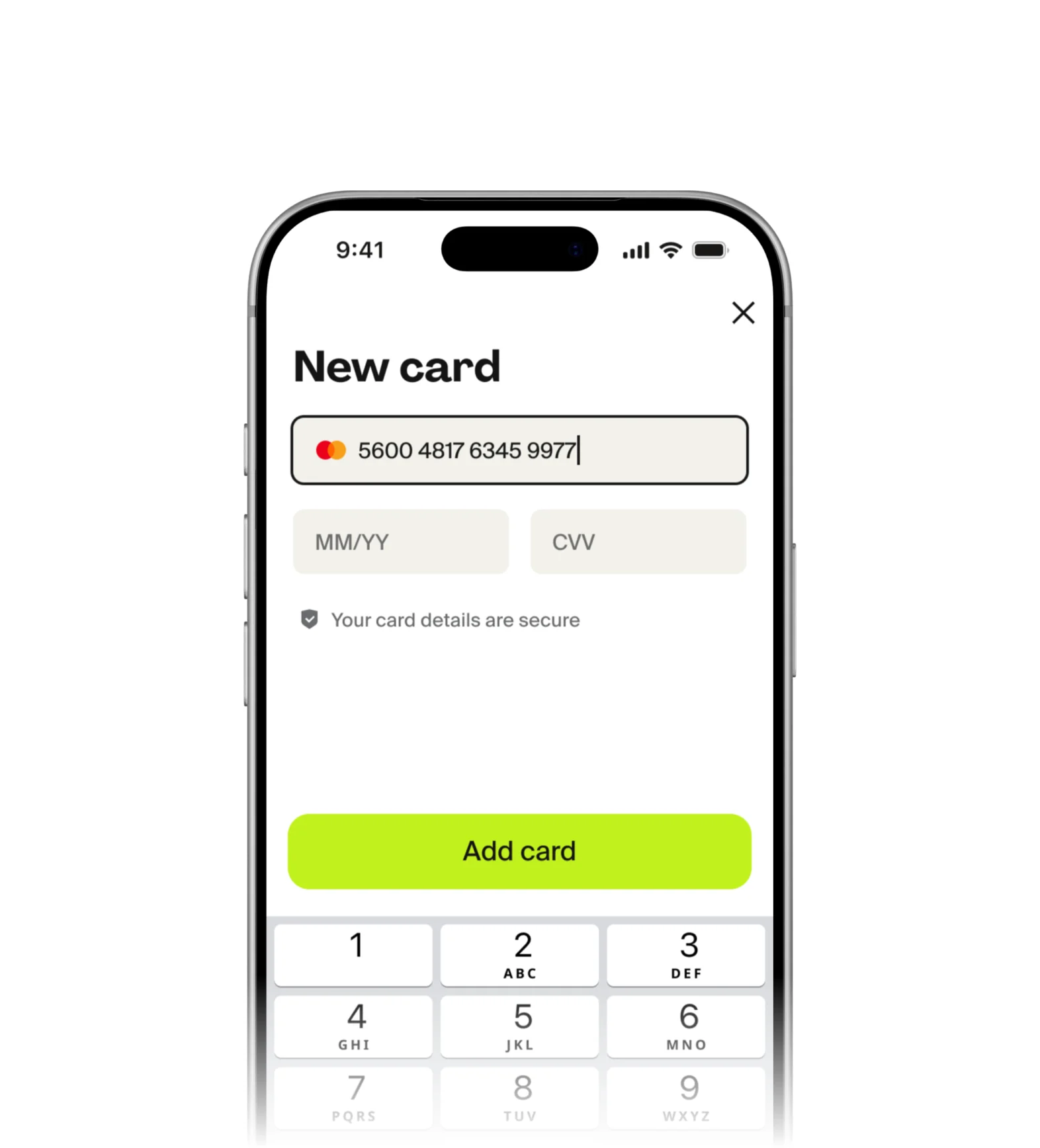
Building the full payment journey, from setup to cash-out, for a marketplace across 48 countries where cash dominates.

One health score, personalised AI insights and Generative UI that adapts to each goal.

A new architecture to move web users to mobile and support future growth.
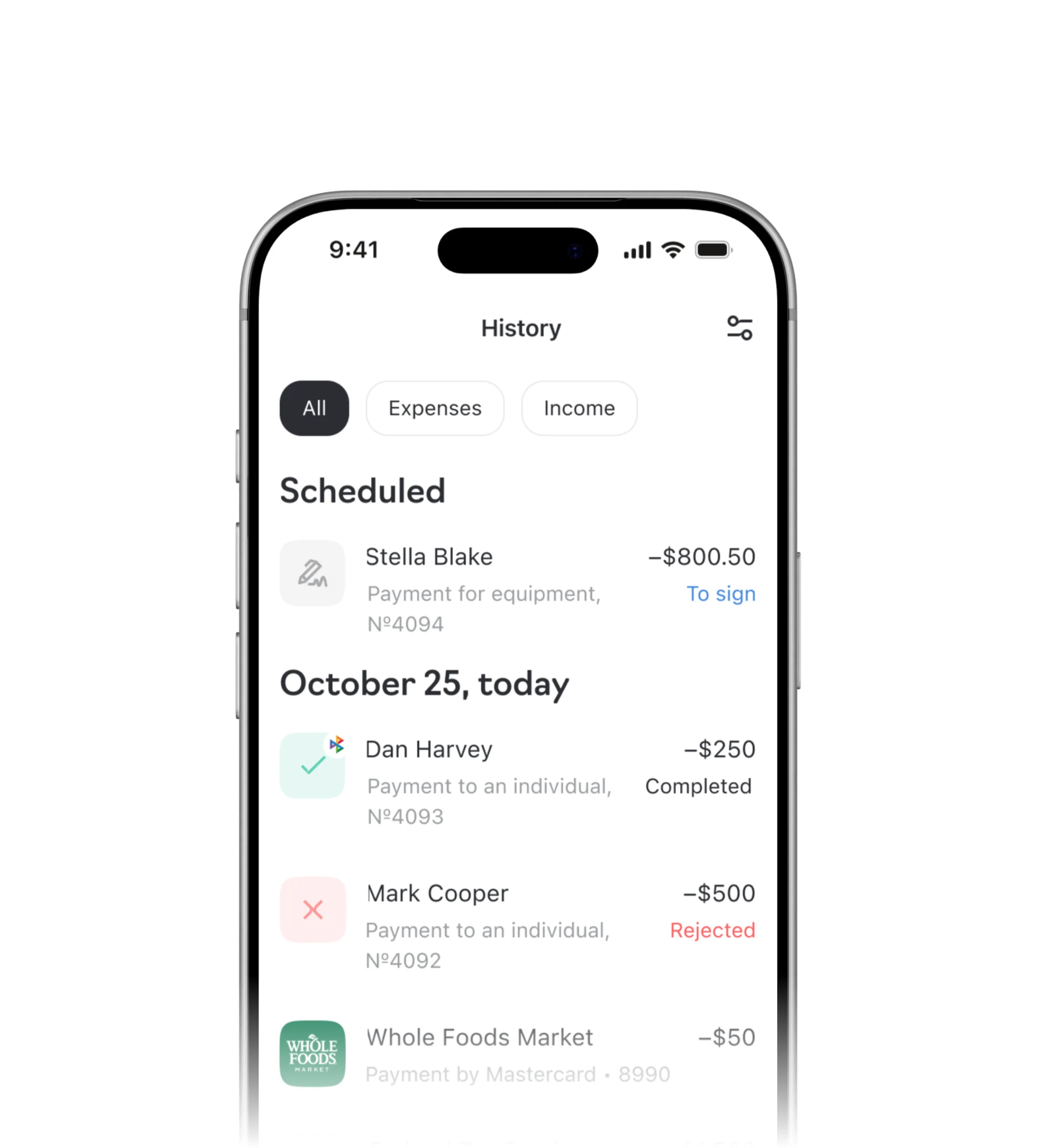
Replacing a three day wait with instant 24/7 transfers.
My background in environmental design taught me to see details as part of a larger system. I bring this perspective to digital products, shaping how they work and scale.
For 8+ years, I've designed fintech products across banking, mobility and marketplaces, from 0→1 launches to multi-market rollouts. I define product logic, solve complex problems and work with teams from discovery through launch and growth.

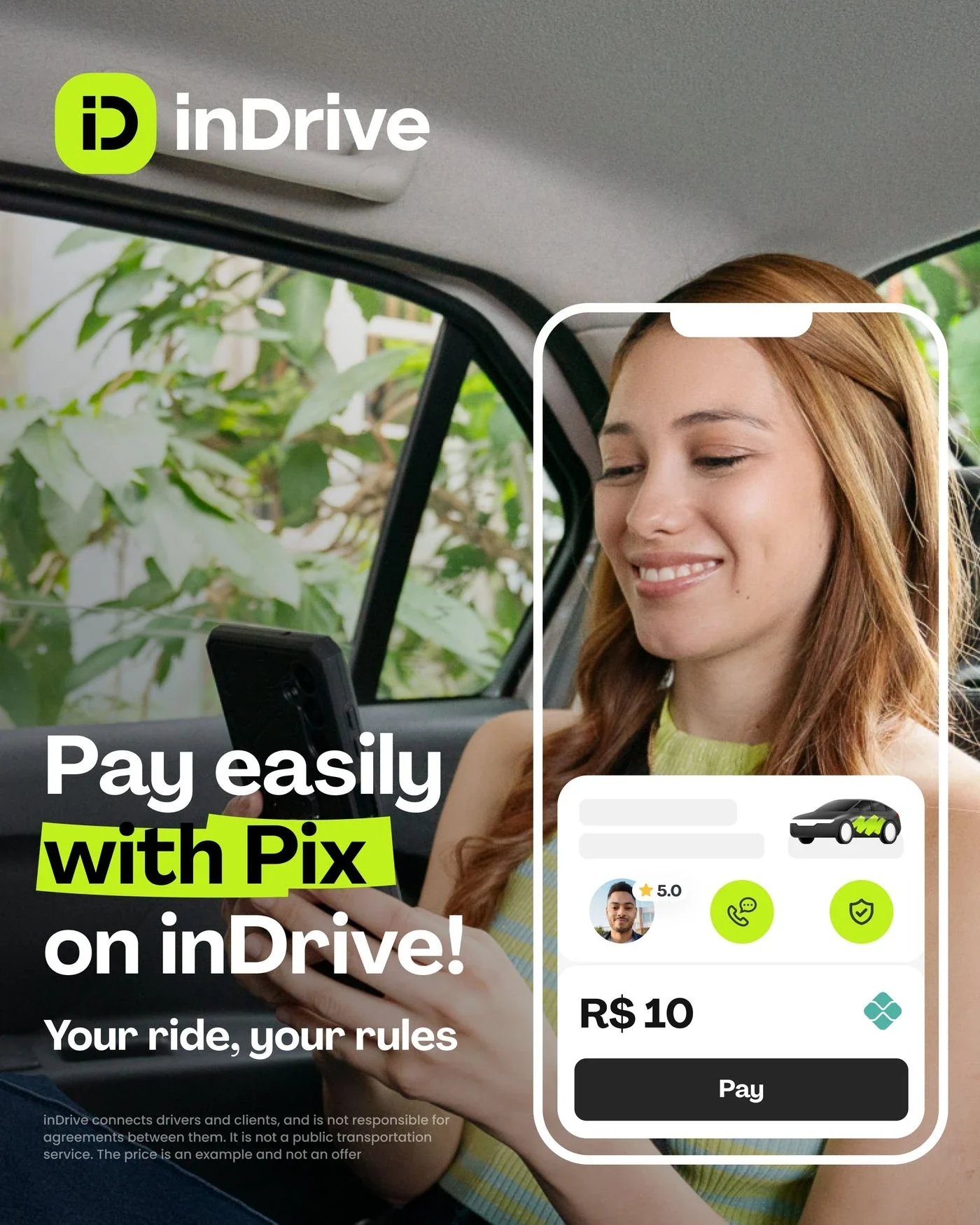
Cashless users in Brazil ride more often than cash users. I designed payment experiences around Pix to increase cashless adoption, grow ride frequency, and support market growth.
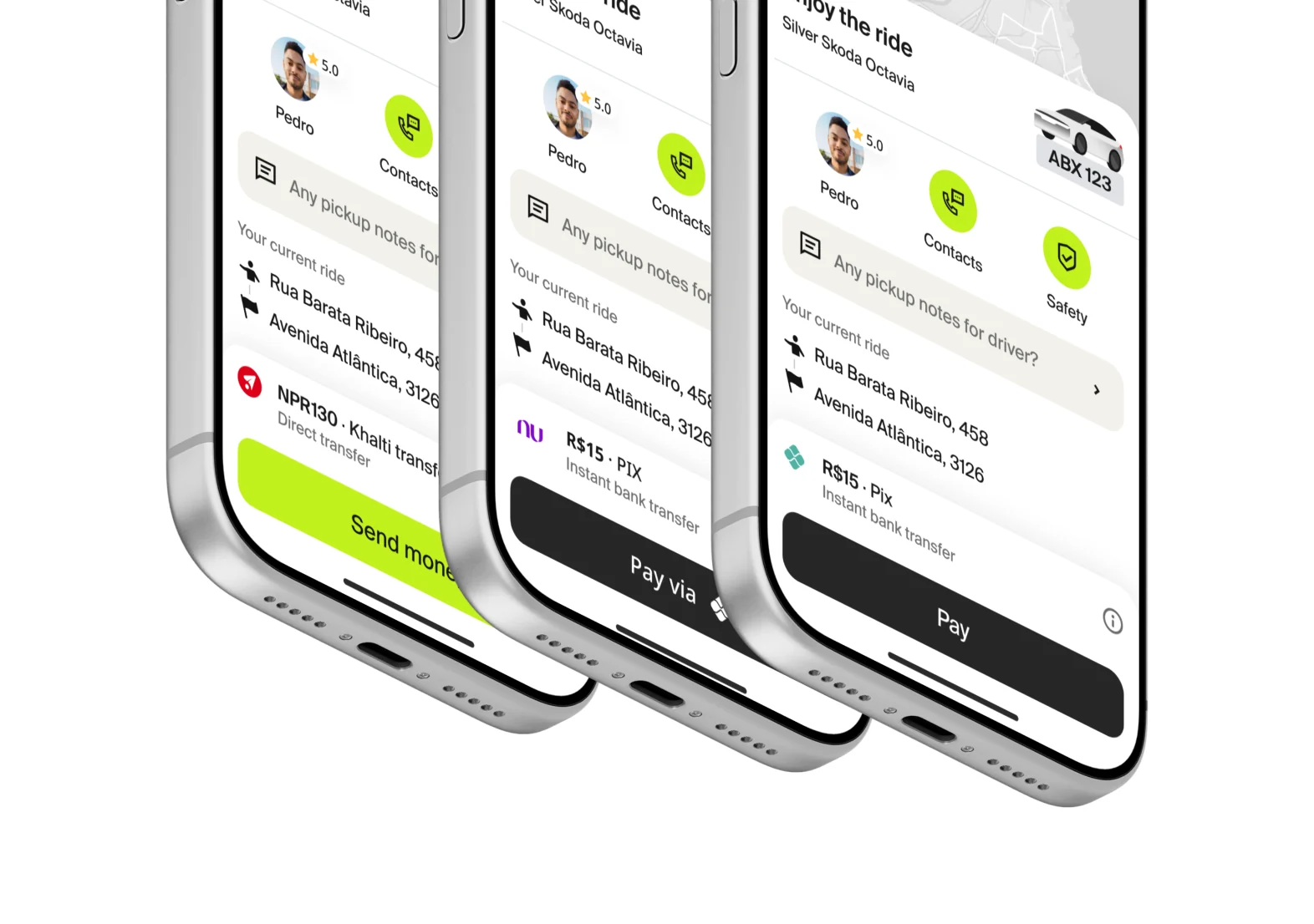
We implemented an MVP that allowed passengers to copy and paste transfer details into their banking app to complete the payment.
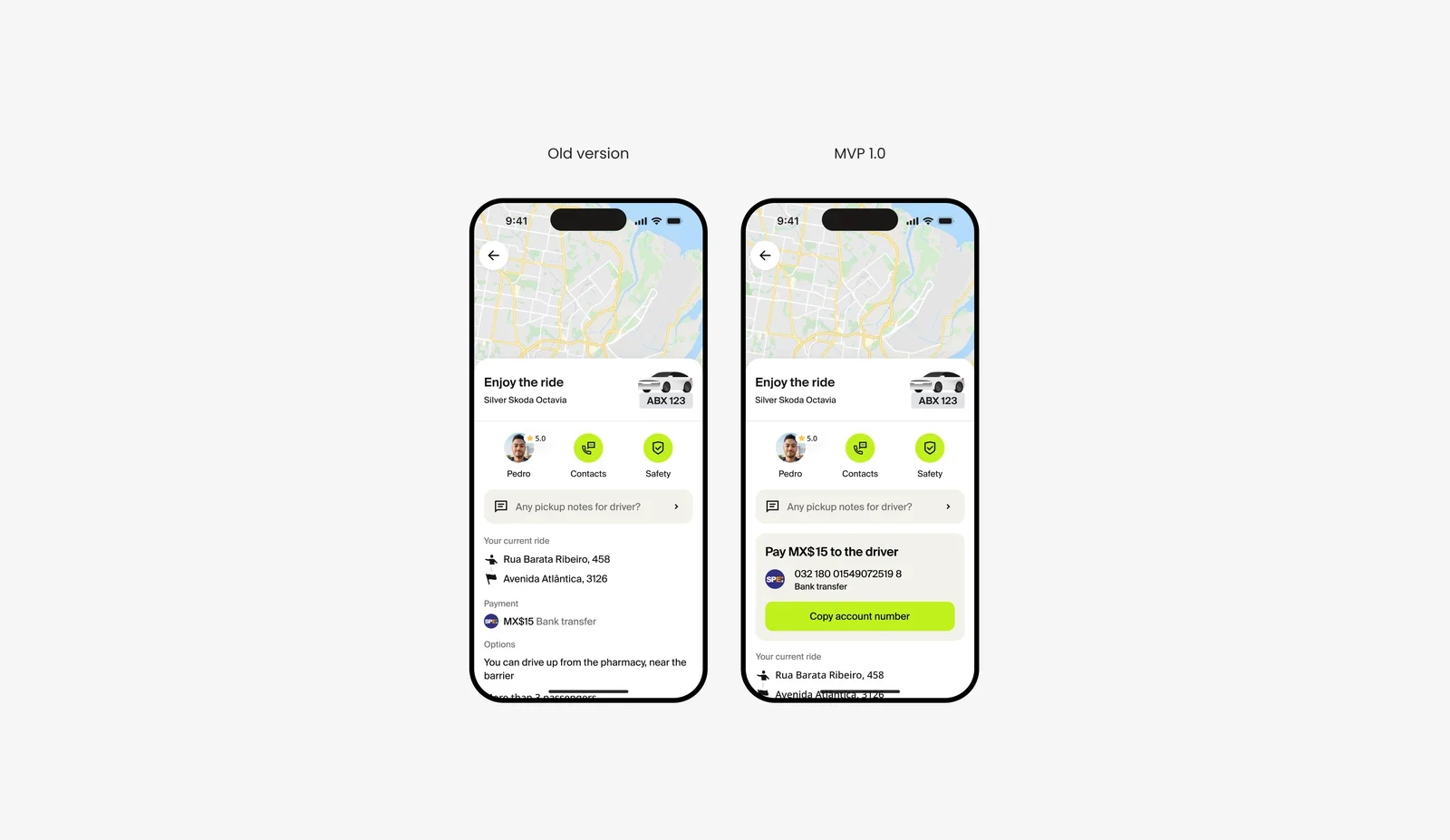
Many users still didn’t notice the payment button on the active ride screen.
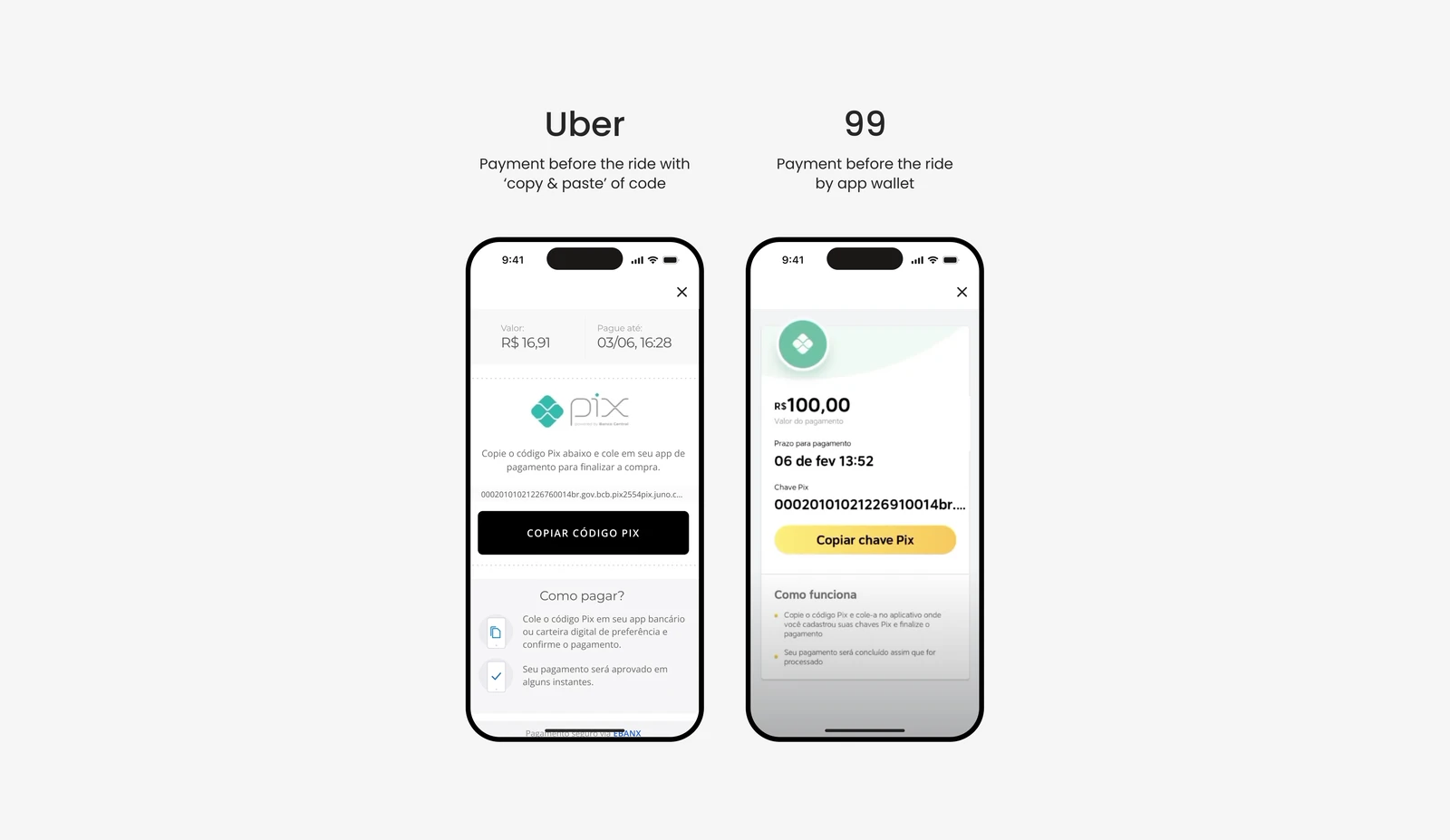
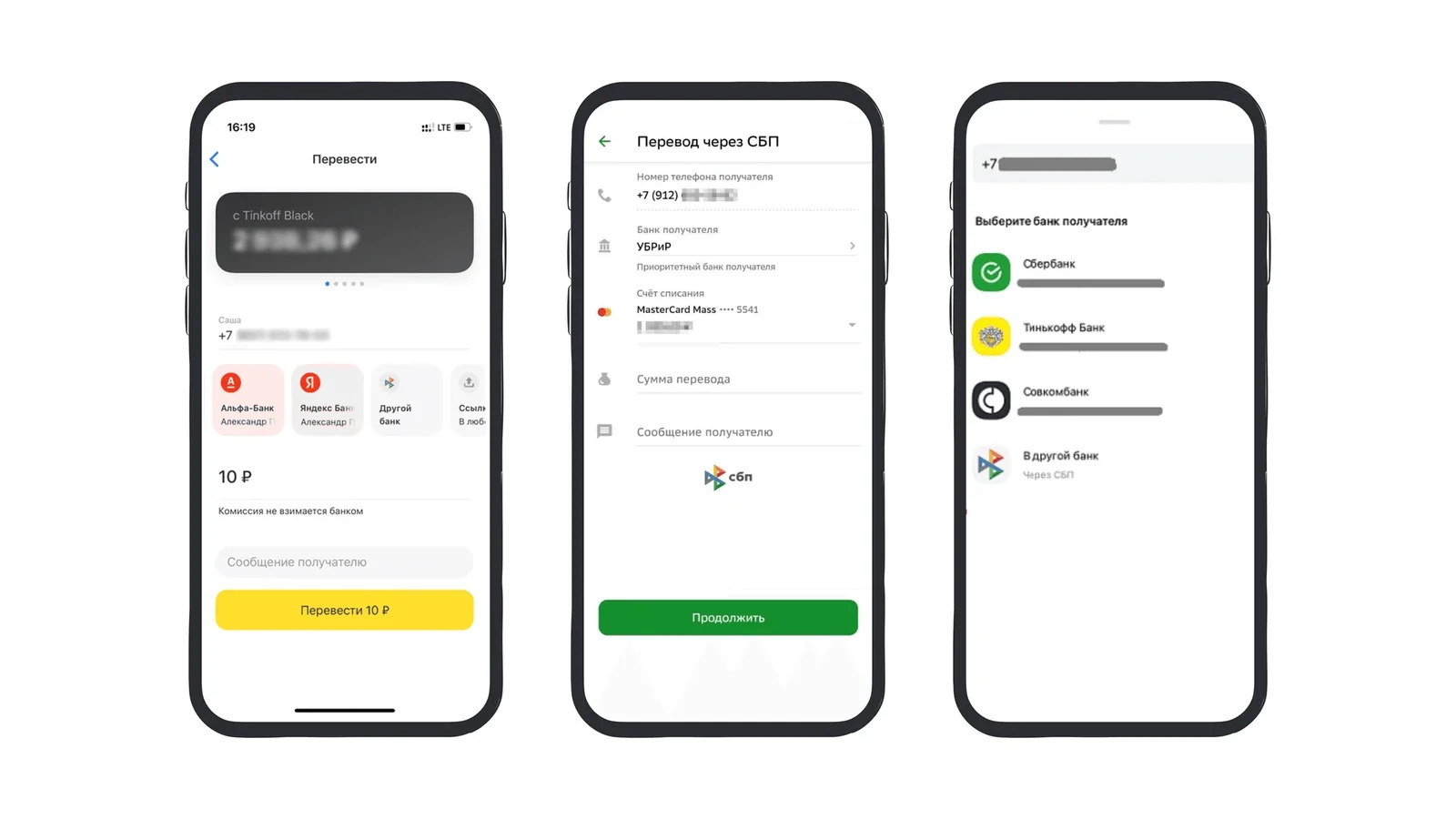
We researched current B2C payment solutions and found that most used the same technology for fast money transfers. However, the user experience wasn't ideal — in Uber, passengers are required to transfer money before the ride, while in 99, users have to top up a wallet in advance.
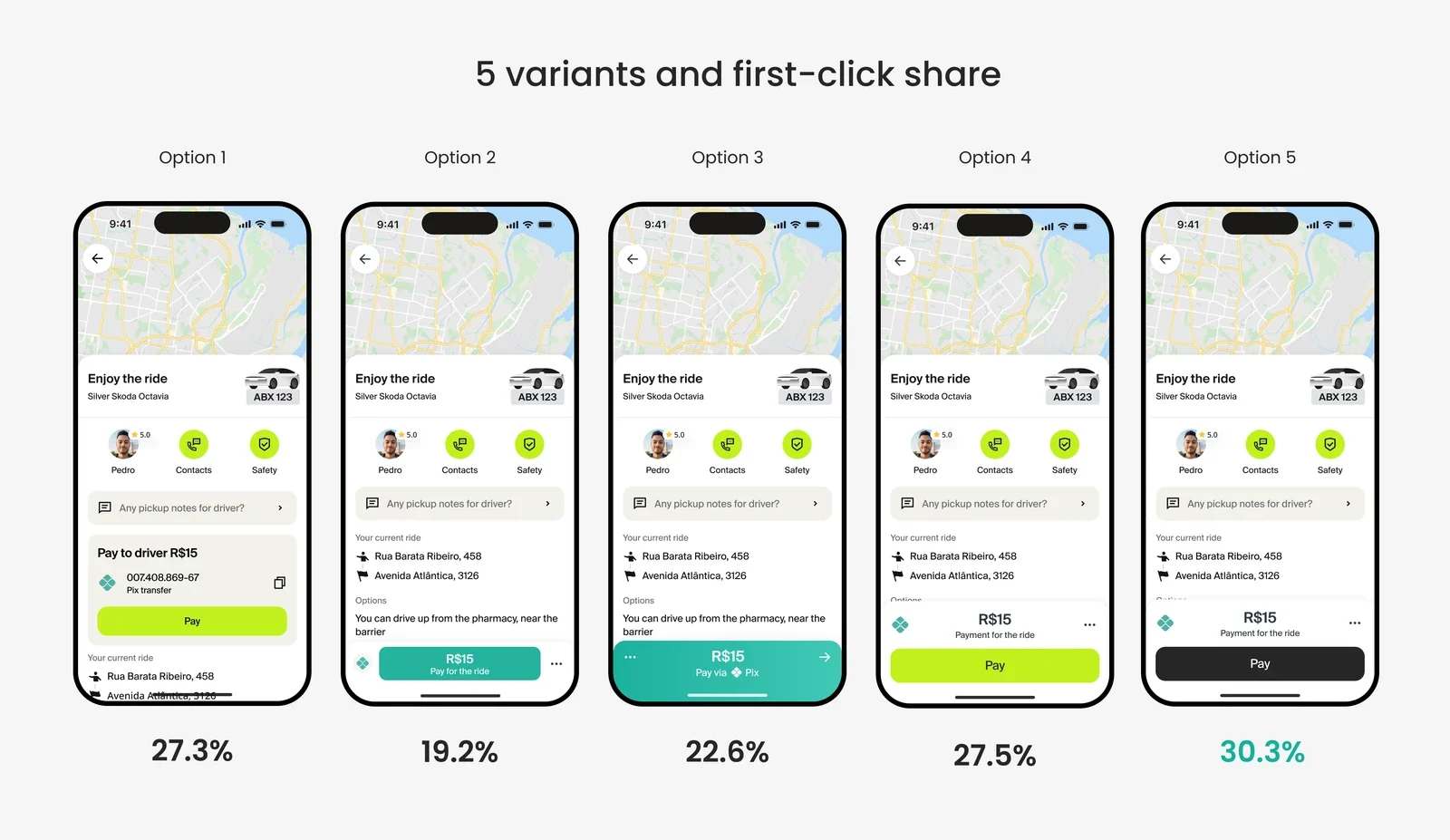
I tested five variants, including the version already in production, to see if a new approach would make the payment button more visible to passengers.
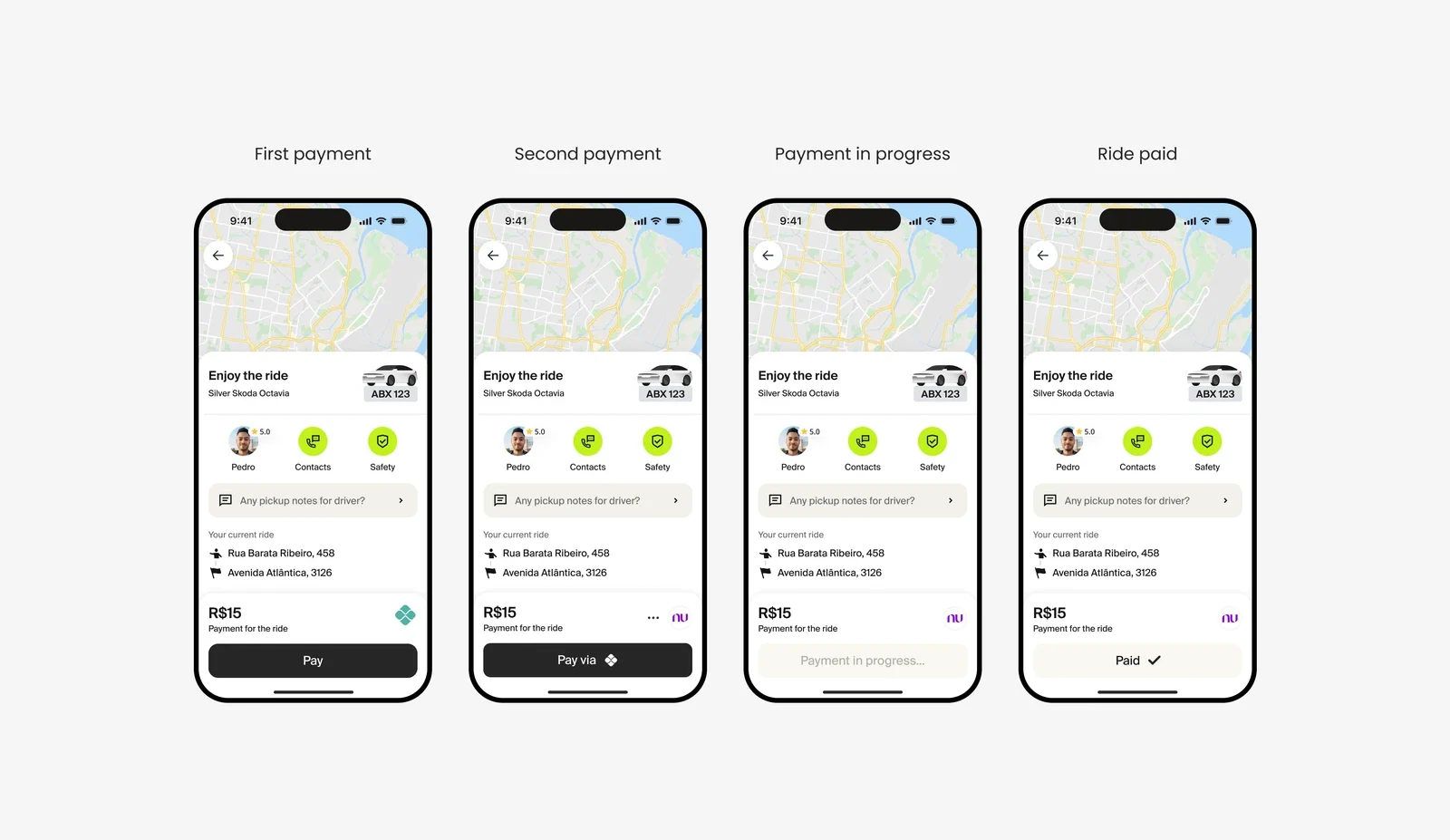
I created a payment widget that provides users with real-time feedback on payment progress and results, improving transparency across the flow.
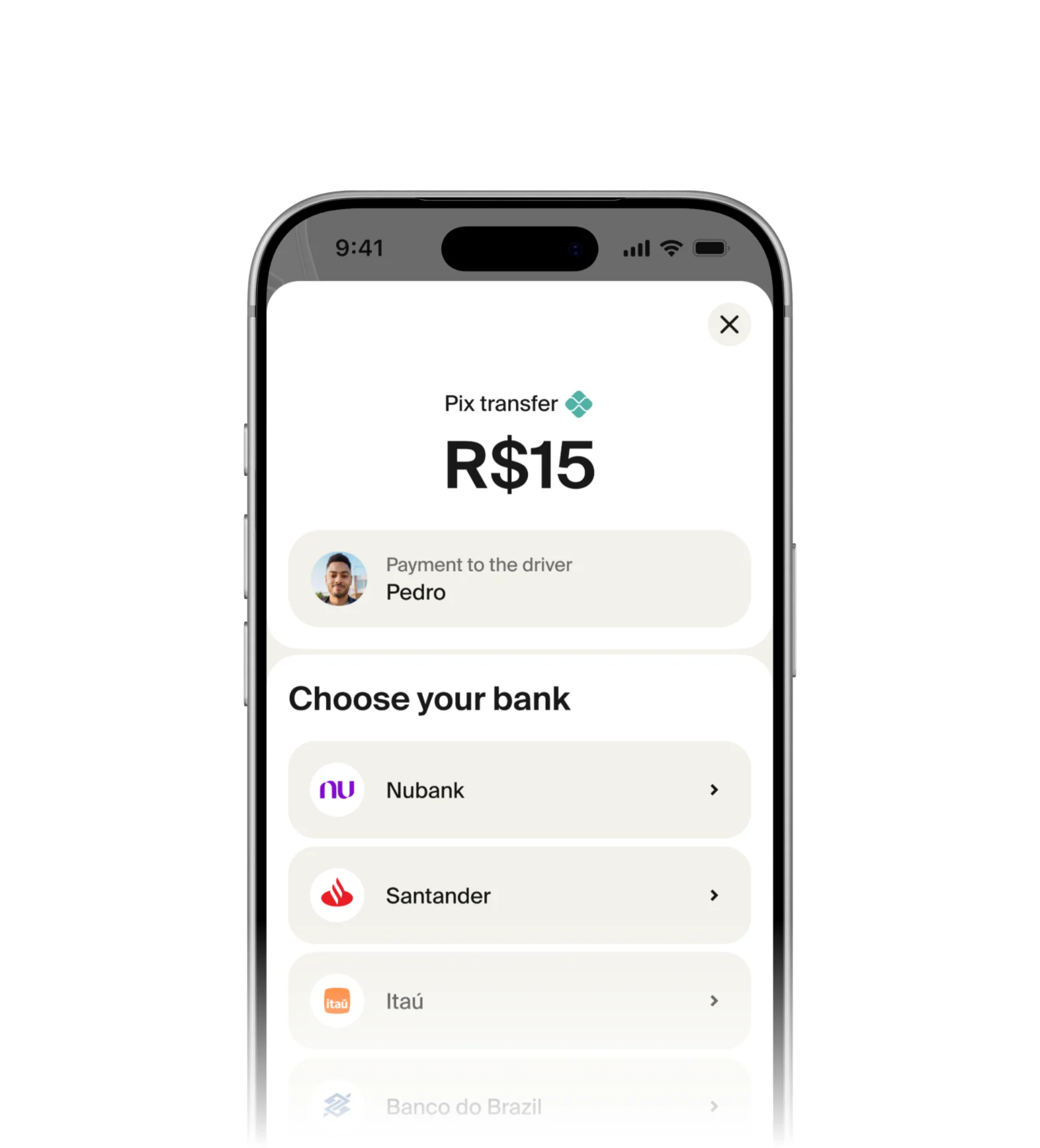
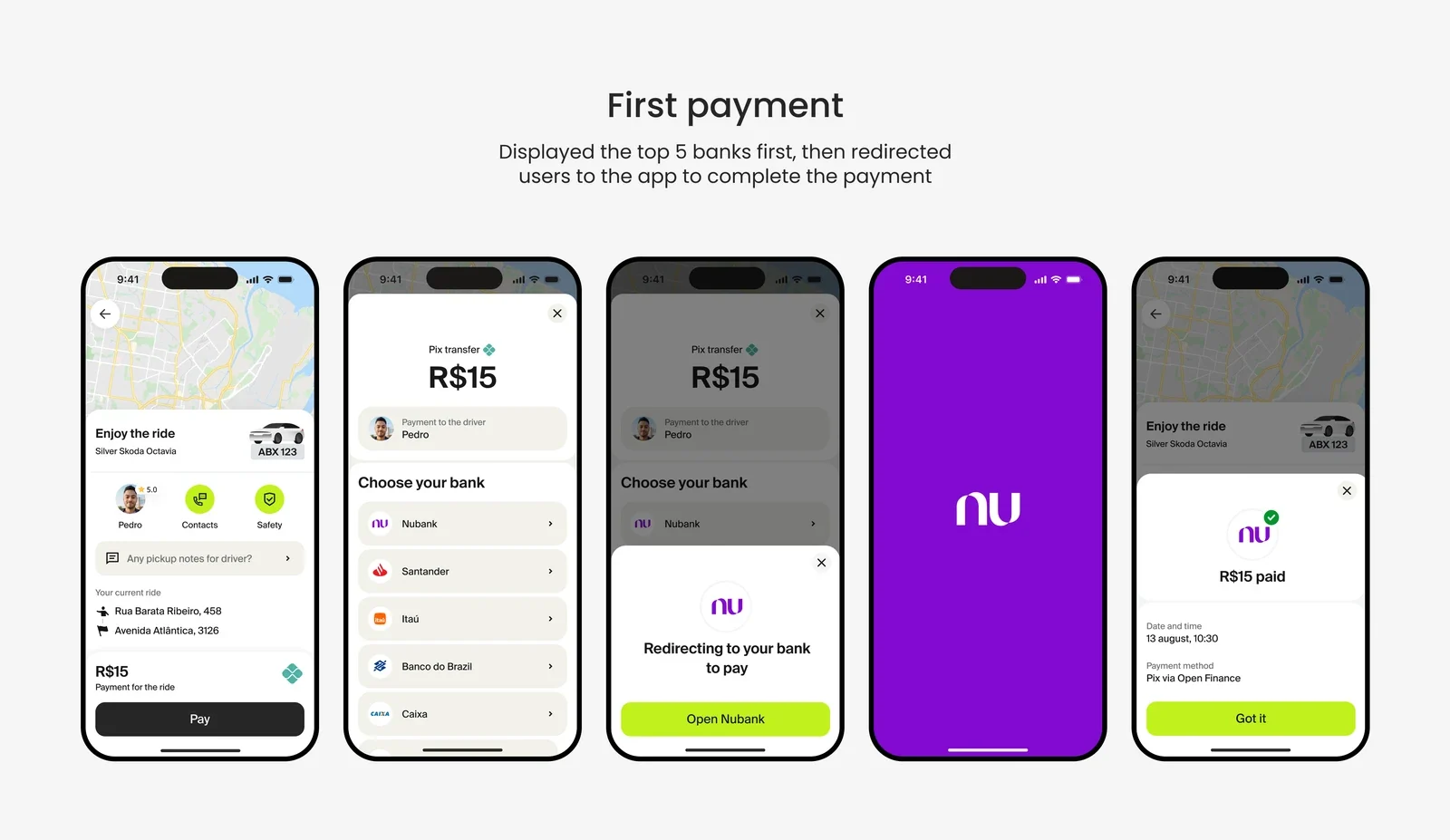
Payment flow starting with the top 5 banks most preferred by users. This led to faster adoption and reduced checkout drop-off.
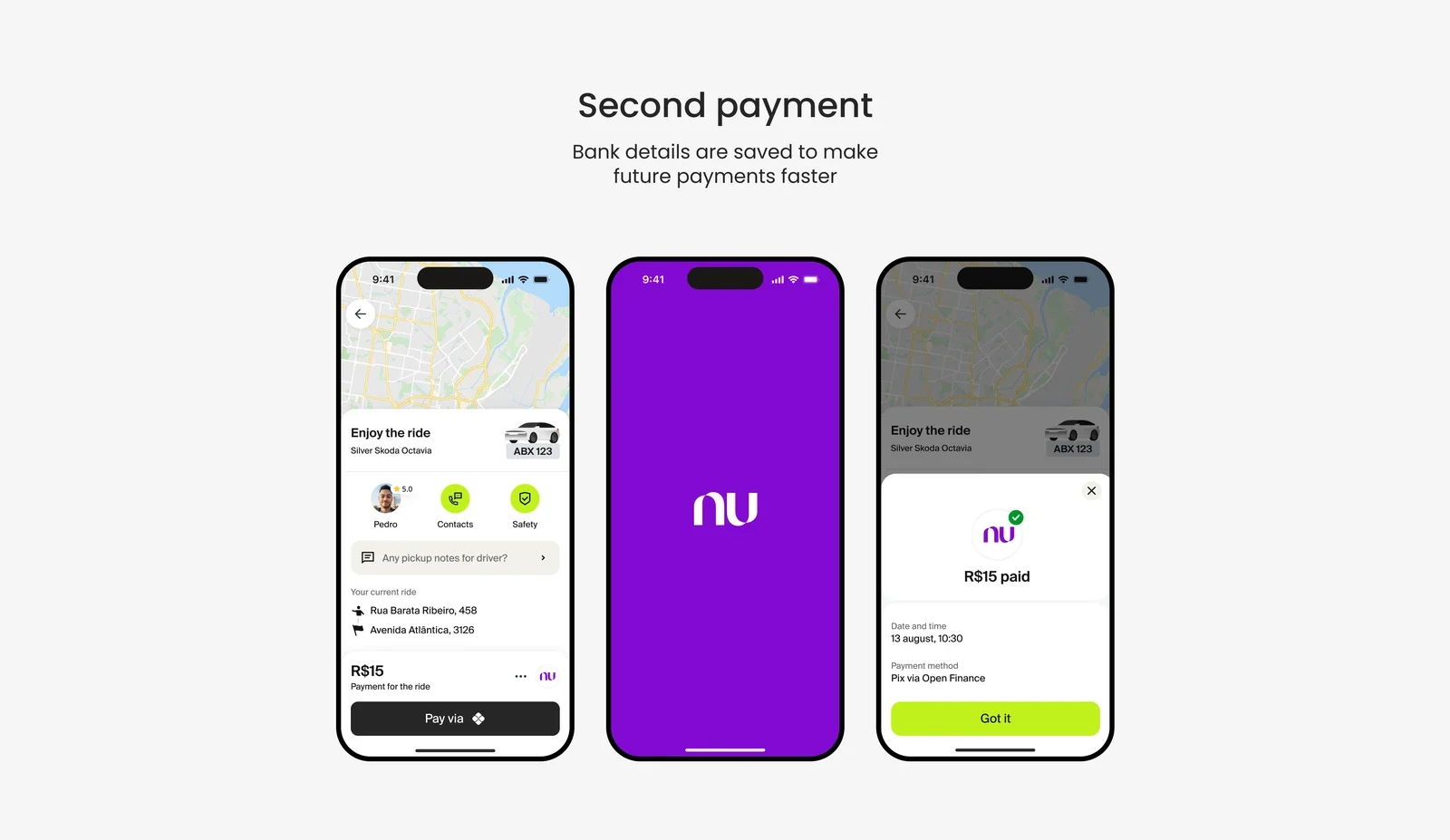
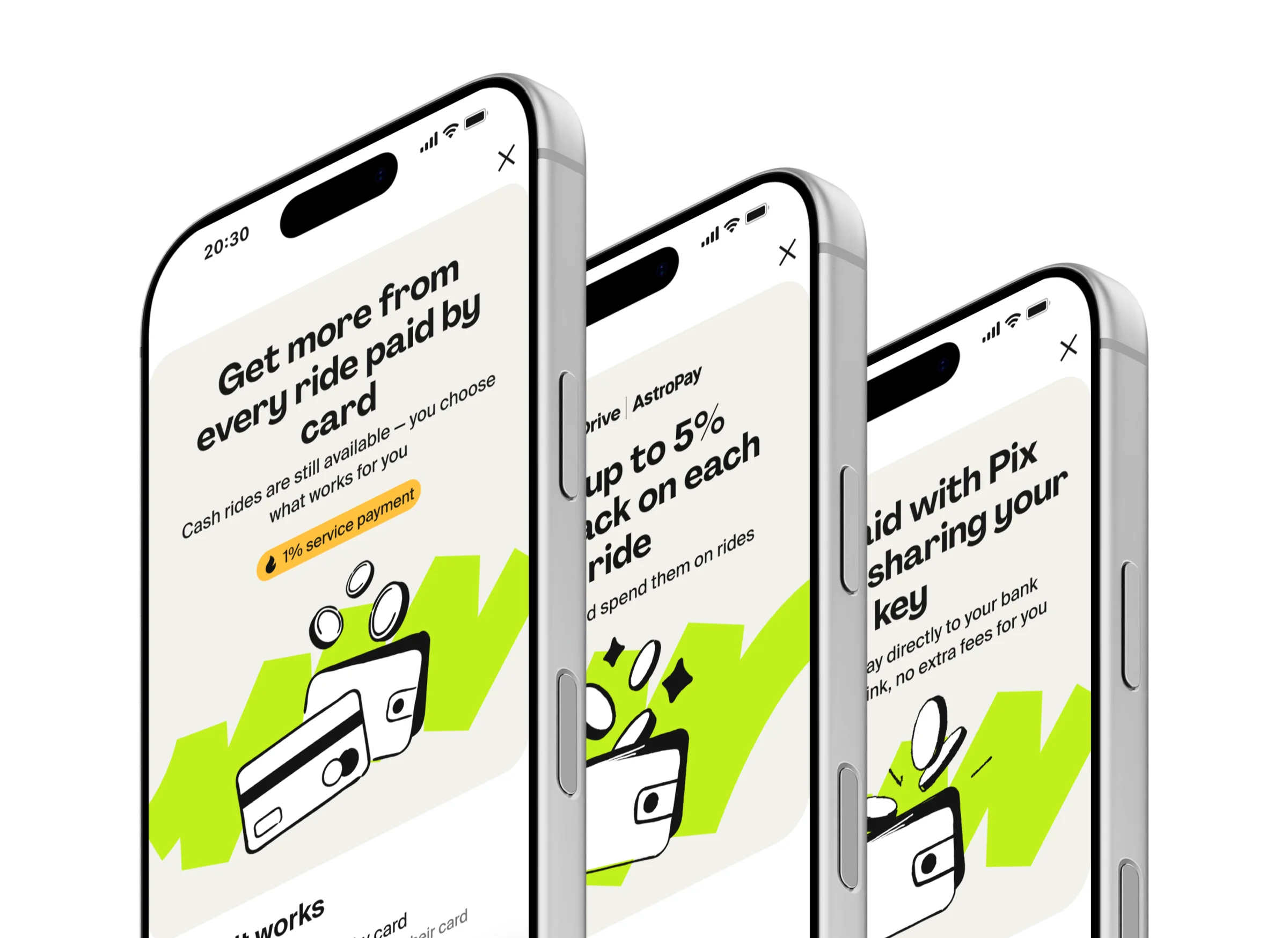
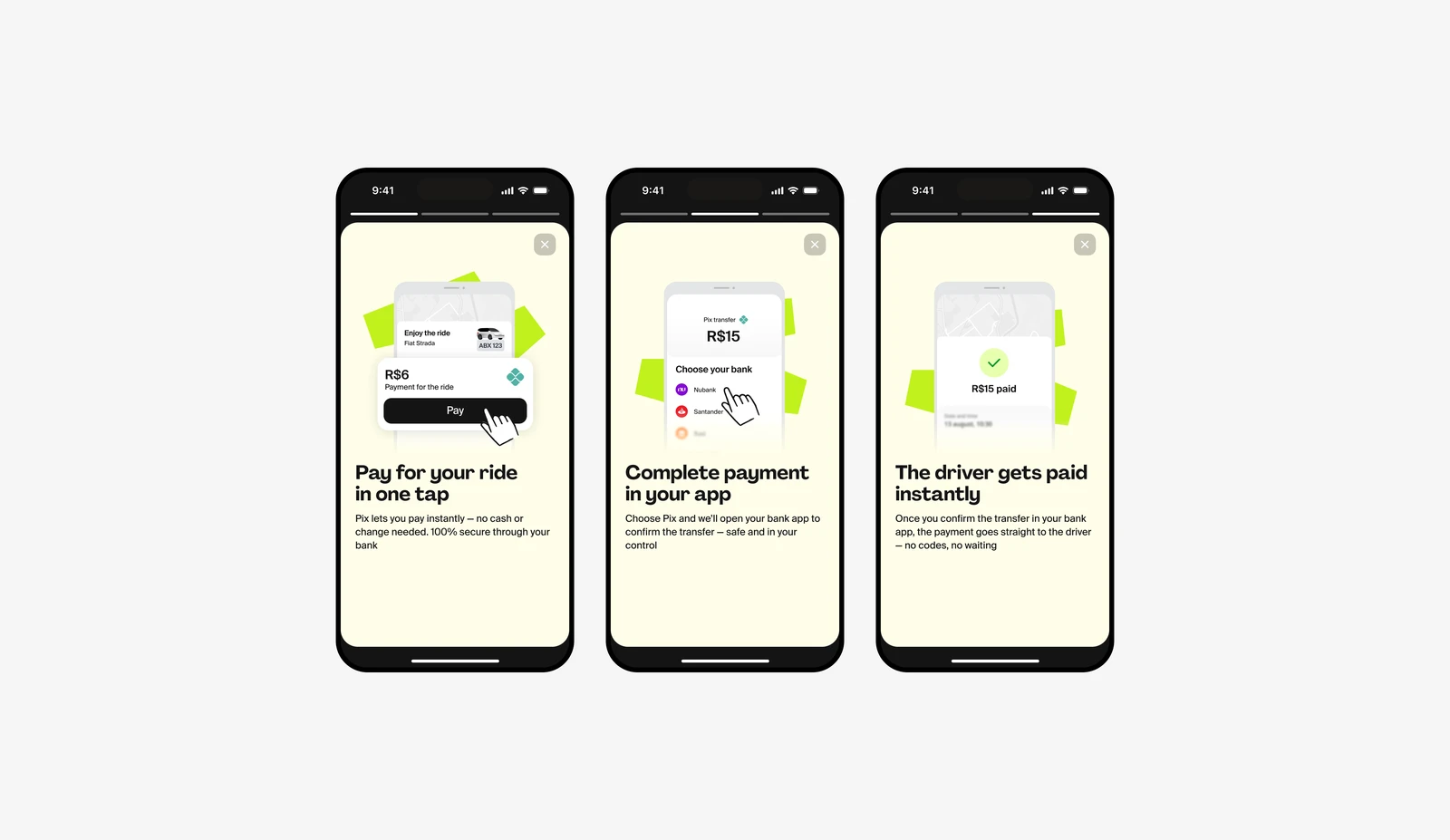
To improve payment adoption during the ride, I led a cross-team promotion A/B/C test, where one variant showed a statistically significant uplift in usage. I also designed a push-triggered onboarding experience to encourage in-ride payment and reduce drop-off after the trip started.
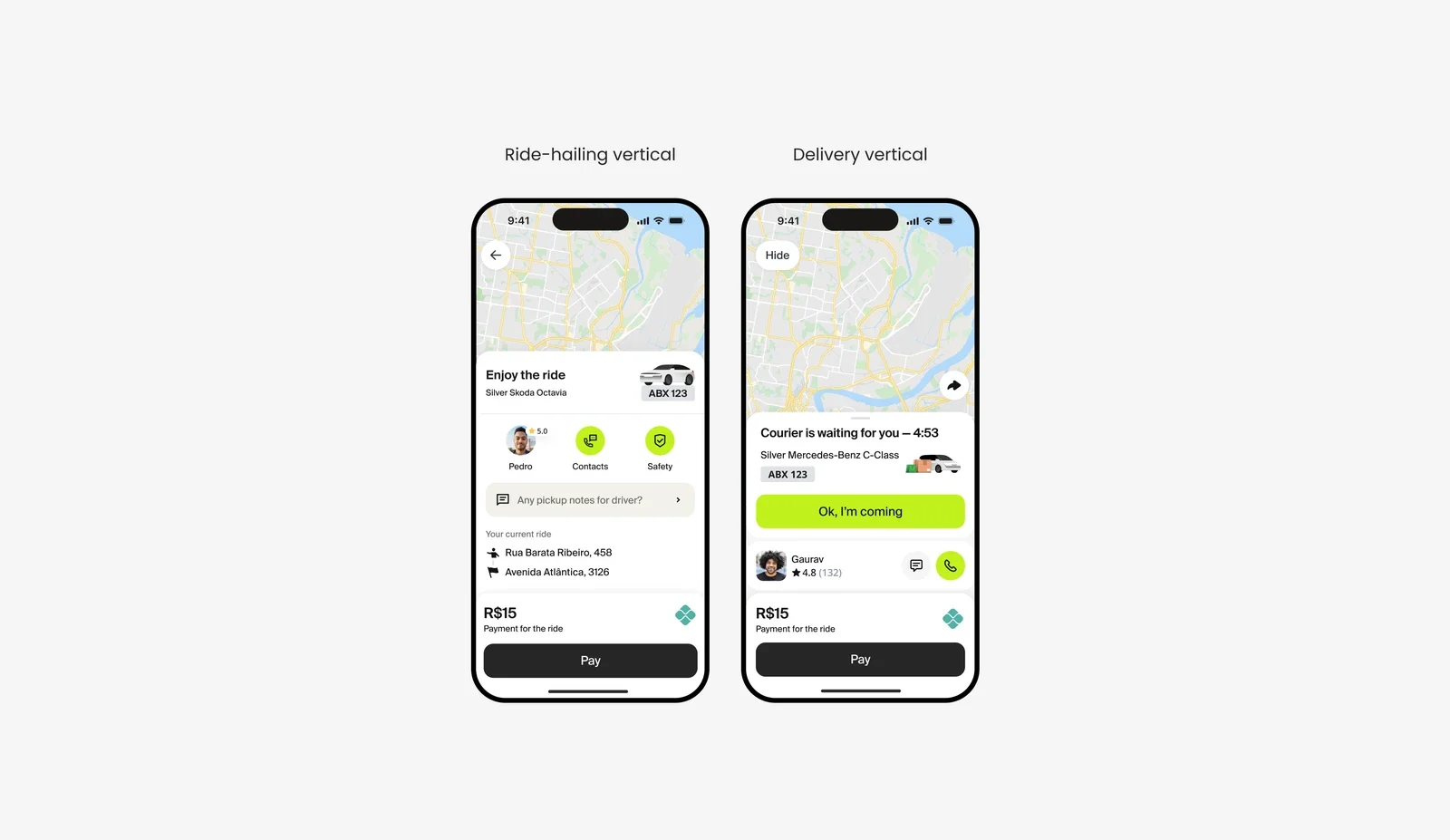
I collaborated cross-functionally to scale the payment widget for the courier vertical.
Later, refined slightly, then rolled out to more payment methods, more markets, and the driver app.
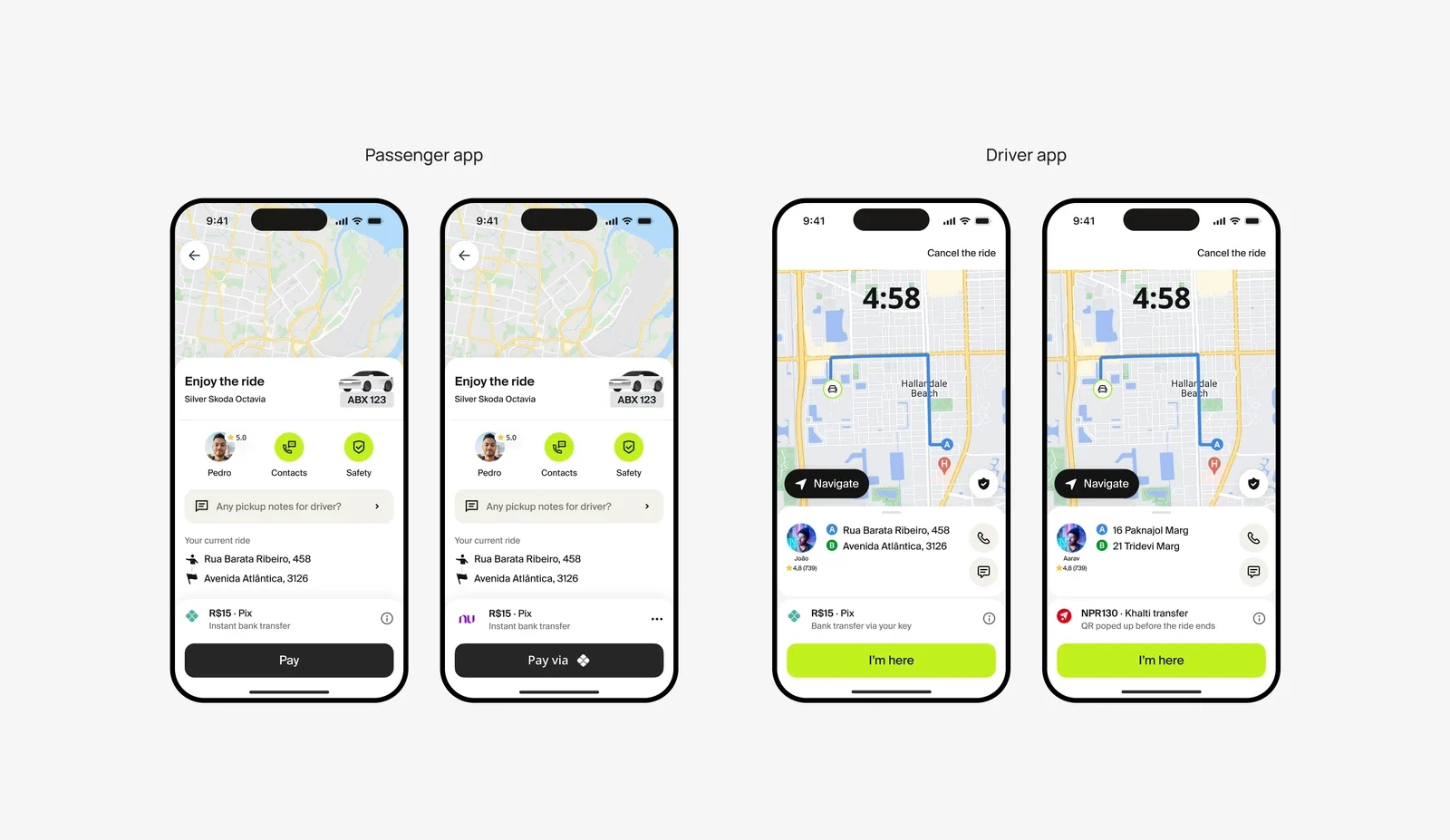
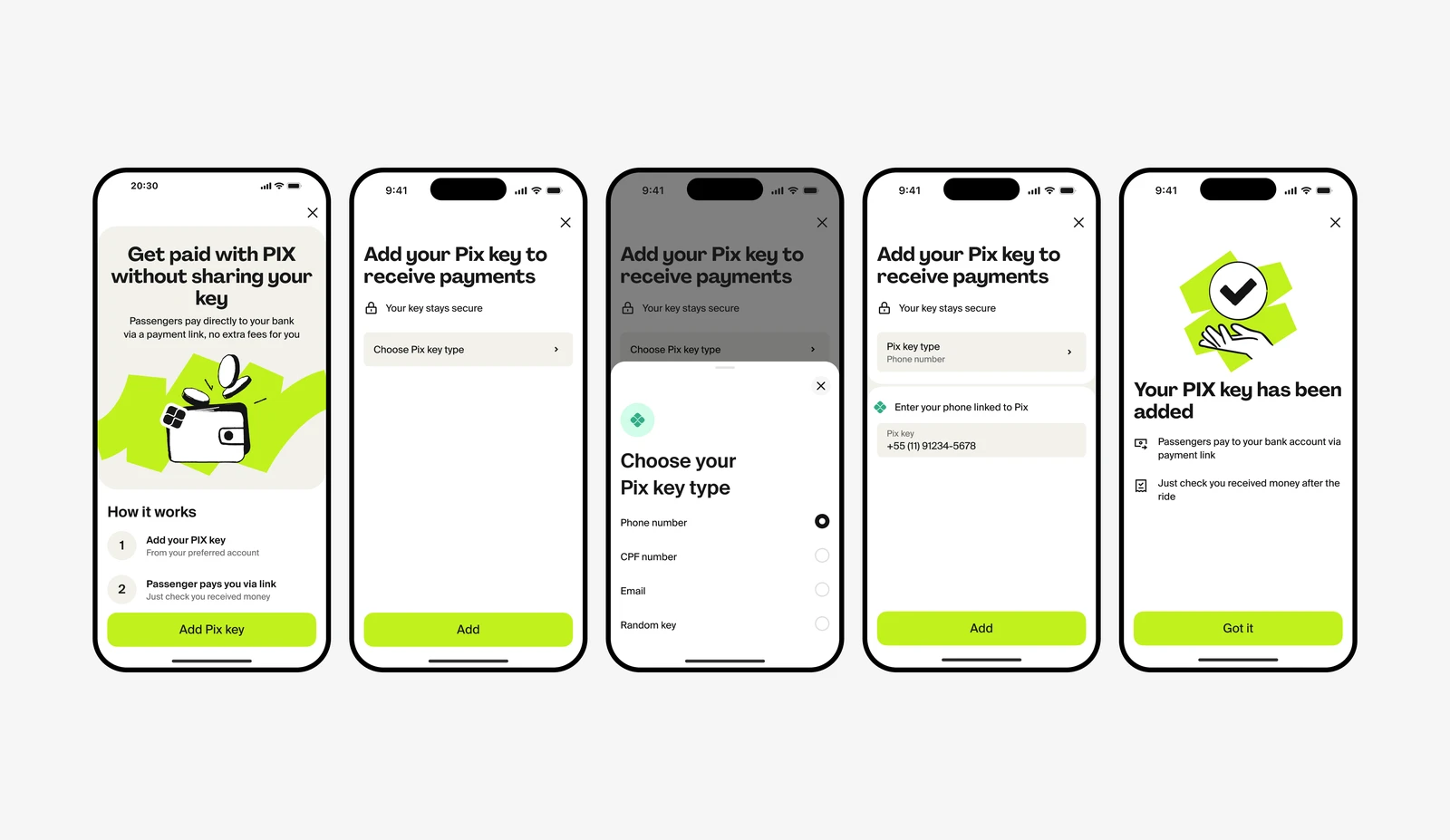
Also worked on the driver side of the flow, where drivers add their Pix key to enable direct transfers to their bank account.
Redesigned PIX activation flow in Brazil, growing driver onboarding by 221% within two weeks of launch.
Next project · Serra
Designing payment and wallet experiences around local methods, rules, and user behavior.
Cashless adoption meant designing for markets where cash was already the familiar way to pay. I designed and scaled payment and wallet flows for passengers and drivers across 48 countries.
inDrive is the #2 ride-hailing app, with 300M+ downloads, but scale alone does not explain local payment behavior. Cashless adoption was the goal, so the work had to account for local methods, rules, and user behavior. I worked across both sides of the marketplace, designing how passengers paid and how drivers used payment and wallet flows.
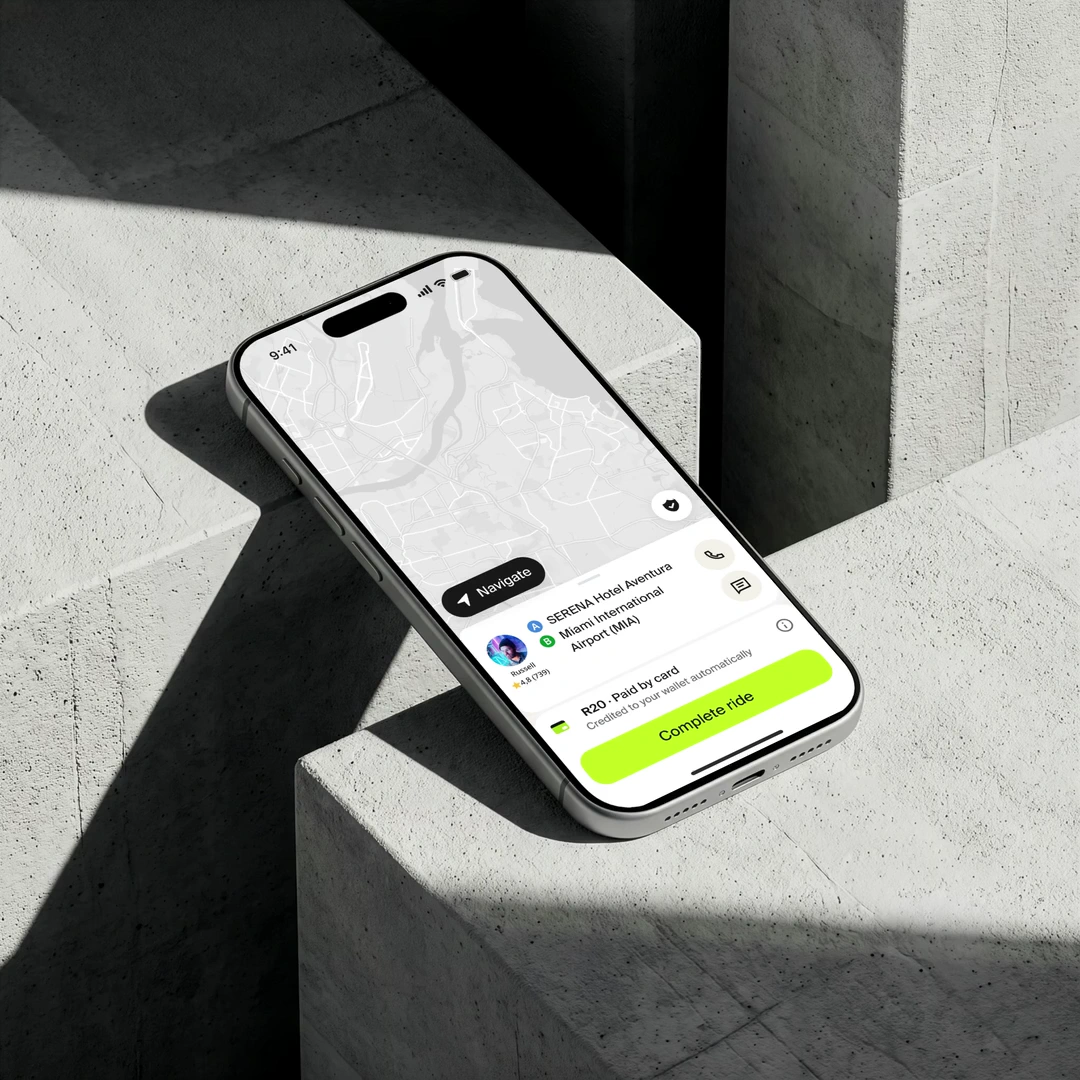
I designed cashless payment flows for South Africa, where cash-first behavior was central to the problem.
Driver adoption reached 82% in the launched cities in South Africa, providing a concrete result for this local-market work.
I tested a passenger promotion aimed at increasing cashless choice on the first ride.
First-ride cashless choice grew from 14% to 45% in one country and from 3% to 39% in another. The experiment scaled globally and helped the fintech cluster reach its annual goal for the year.
I led local-market payment research that became a validation approach reused by product leads. This extended the value of the research beyond the payment flows I designed myself.
I led the unification of 2 top-up flows, which enabled global payment integration and monetization in new countries within 2 sprints. This work addressed the shared payment foundation alongside the local-market experiences I designed for passengers and drivers.
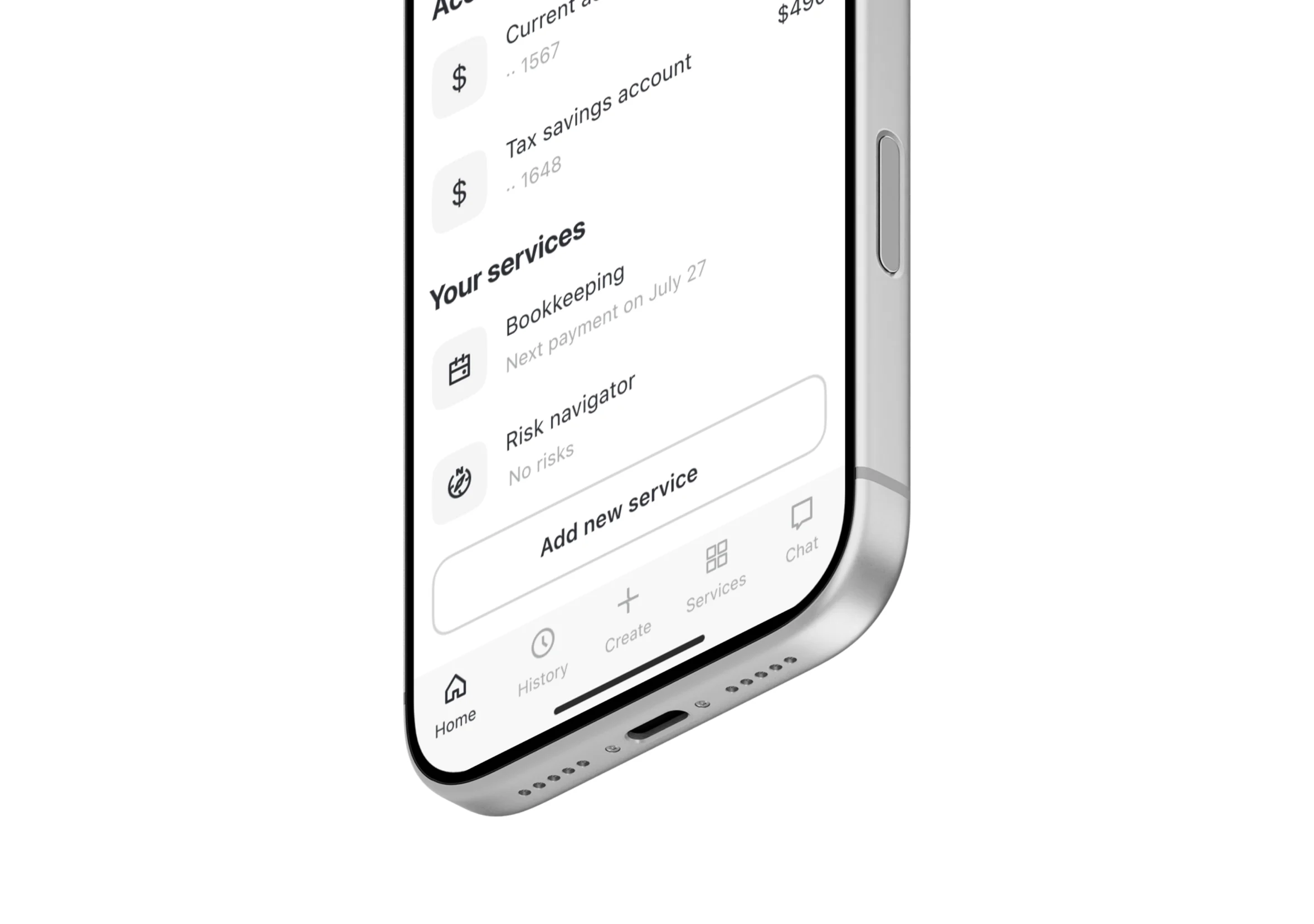
I rebuilt the app architecture to help businesses transition from web to mobile while preparing the product to support a growing B2B user base.
I analyzed feedback from interviews, chat support, and reviews to identify issues, focusing on five key problems:
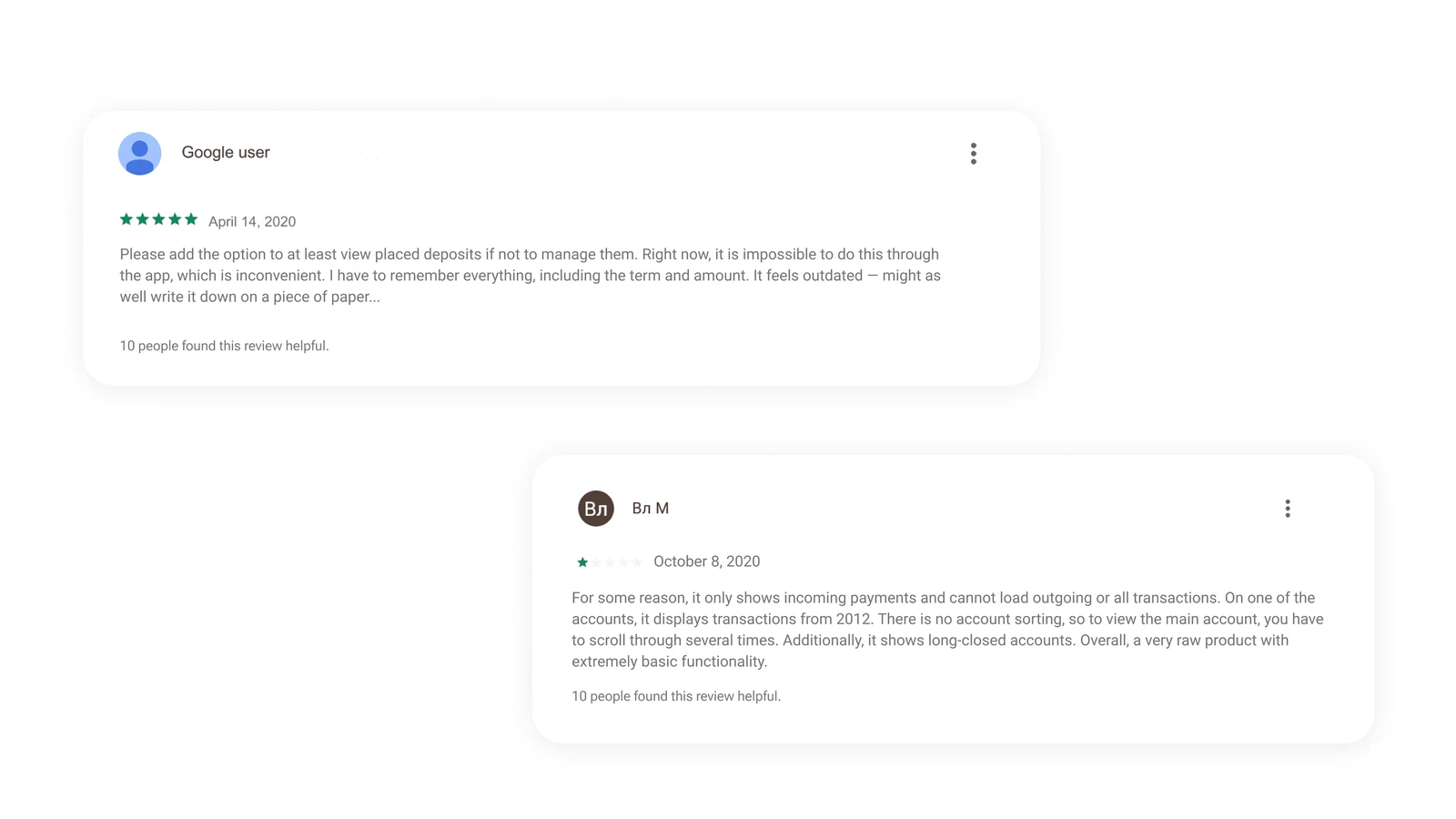
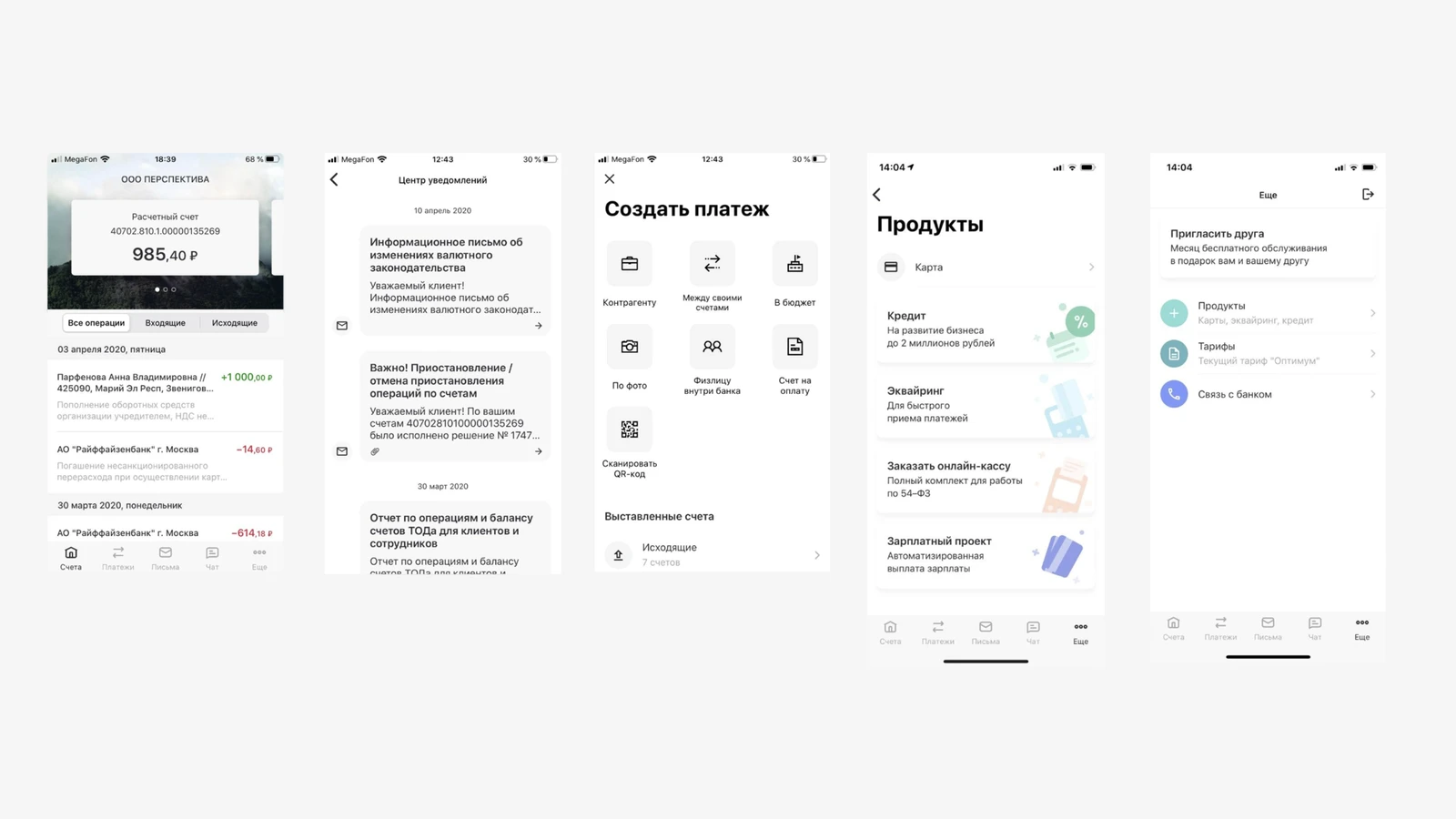
The mobile Account History showed only card and bank payments, while contractor payments were hidden in a separate tab. This created a mismatch with the web version and made users unsure whether their payments had been processed.
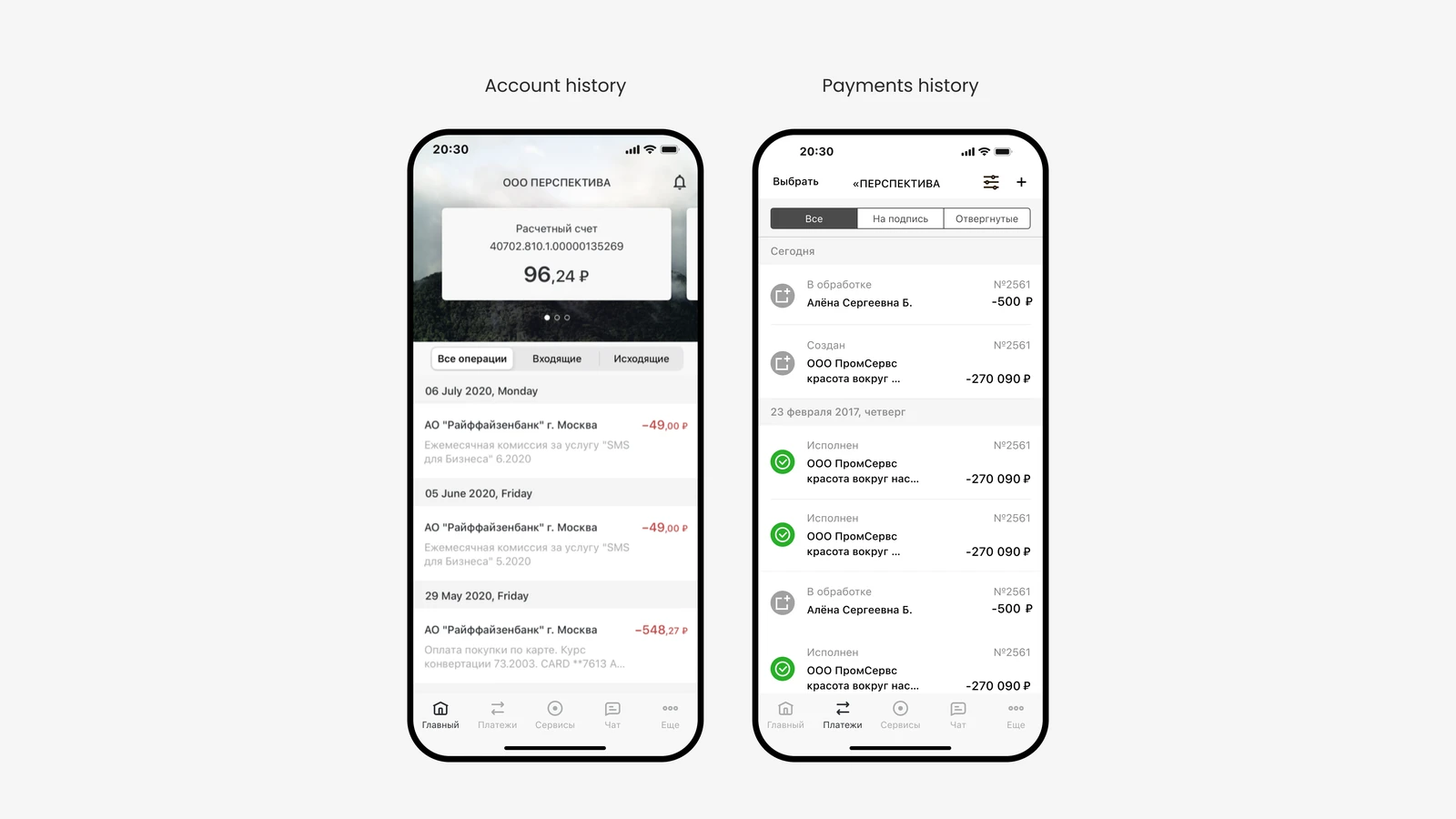
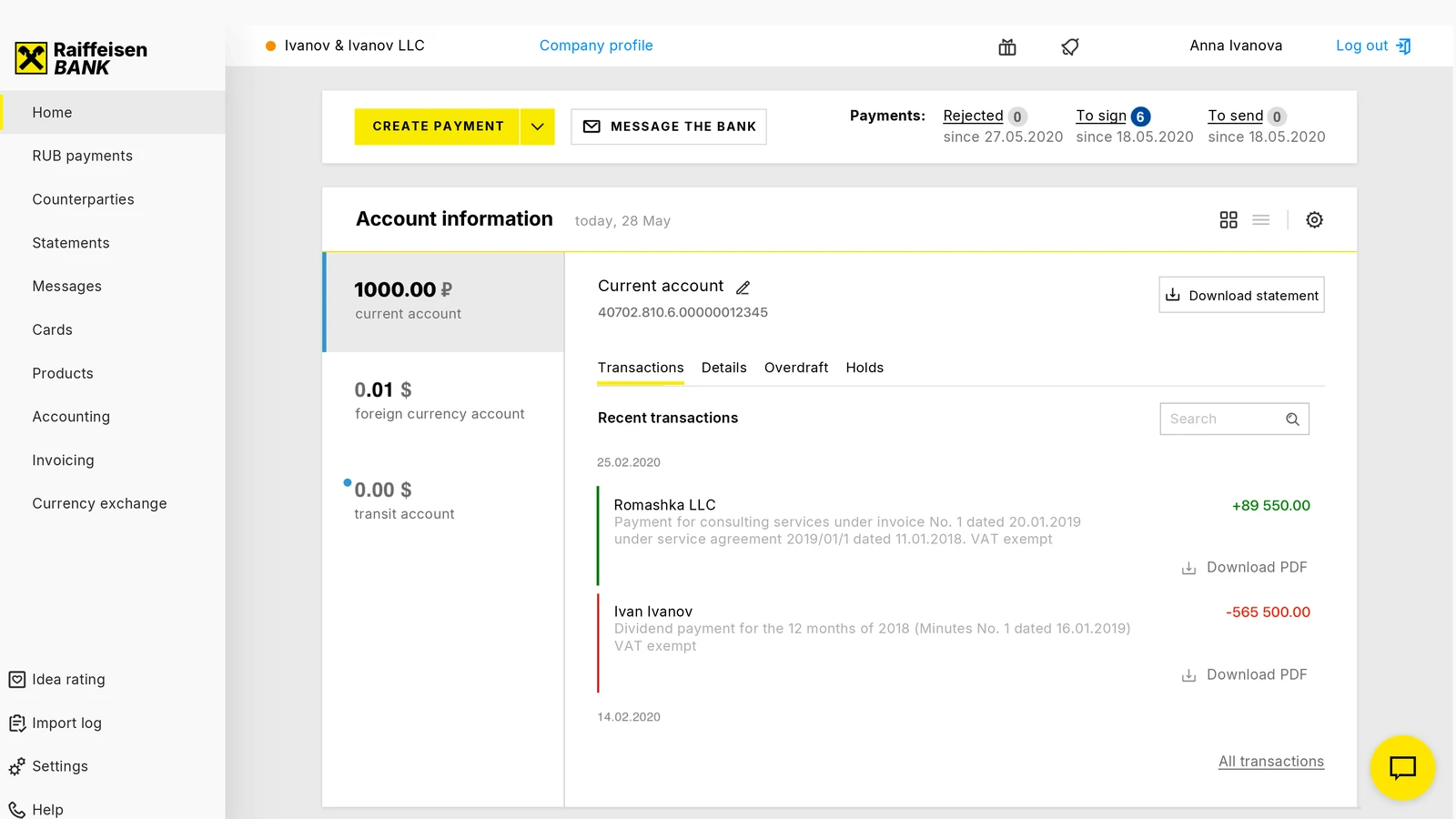
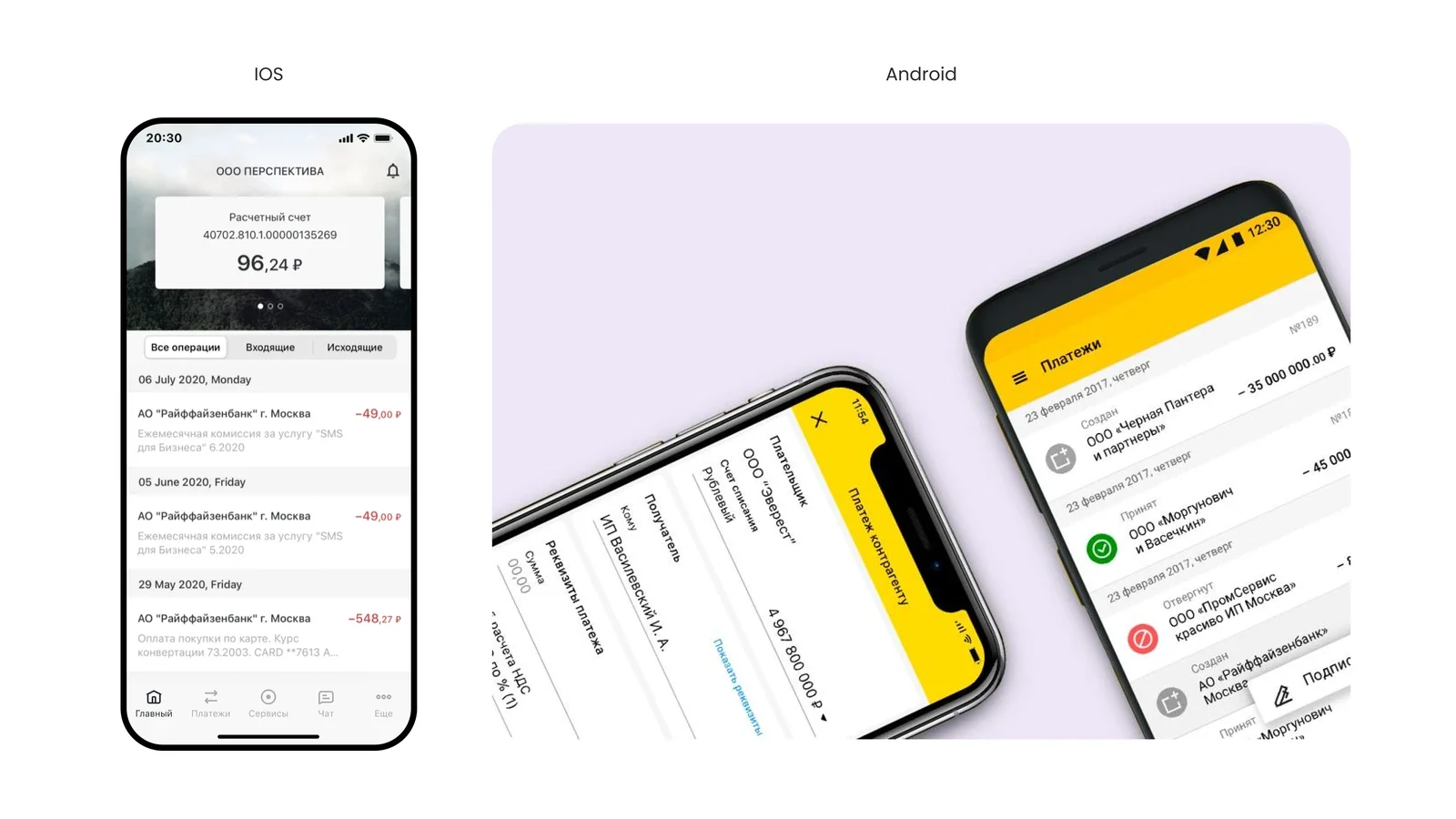
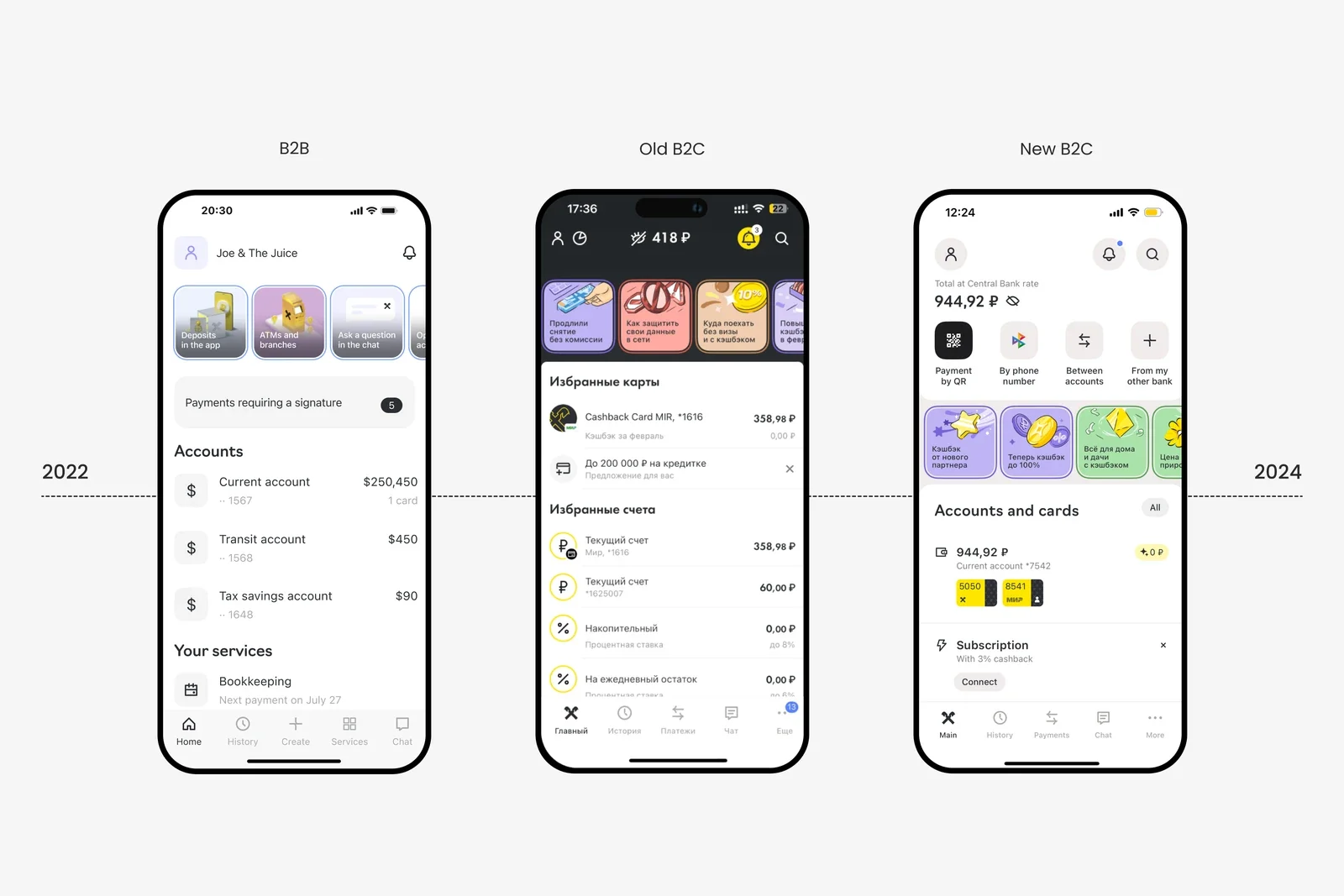
The app had inconsistent designs on iOS and Android and had been outdated since 2018.
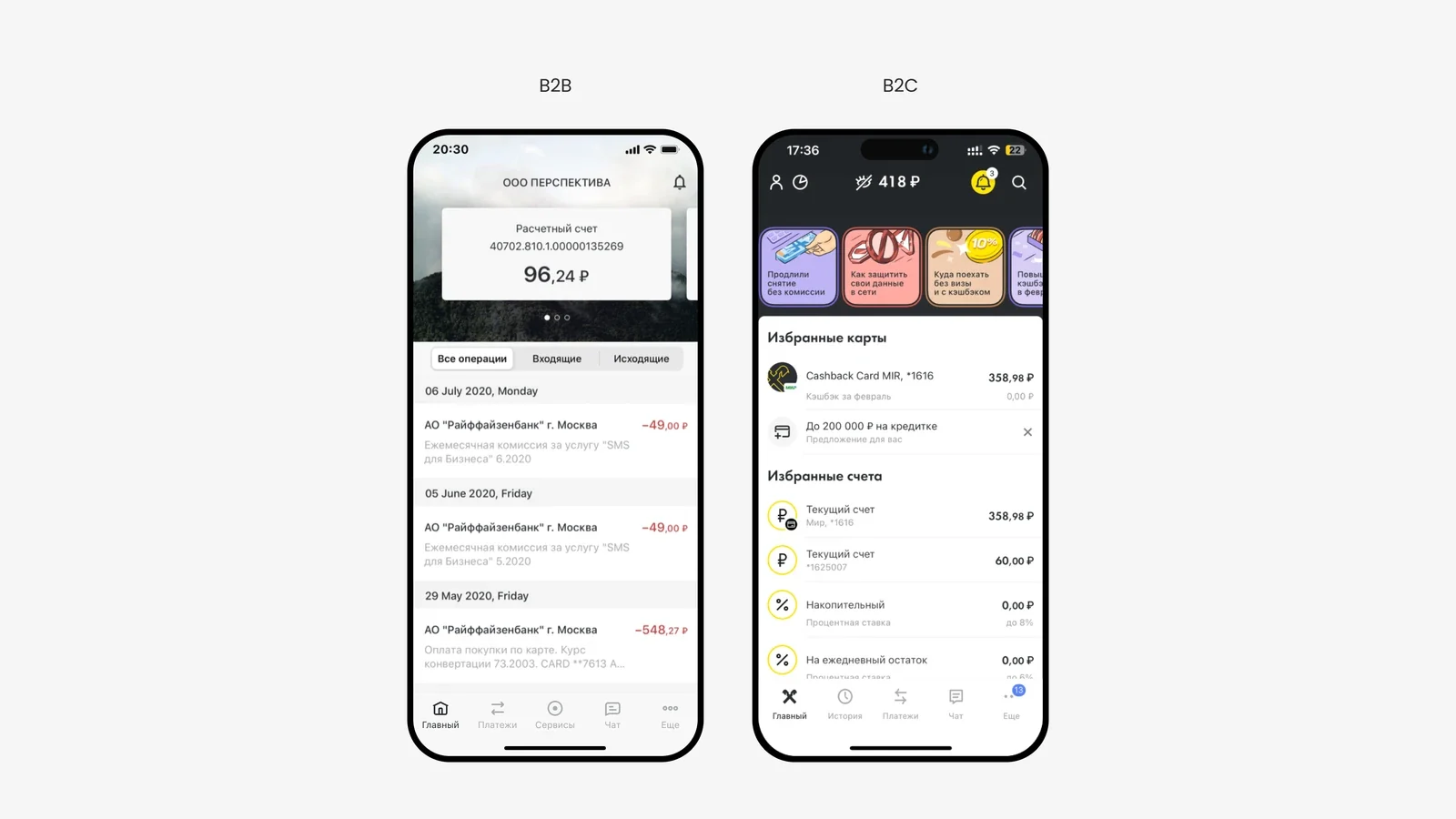
Raiffeisen Bank users had different experiences as private or business clients.
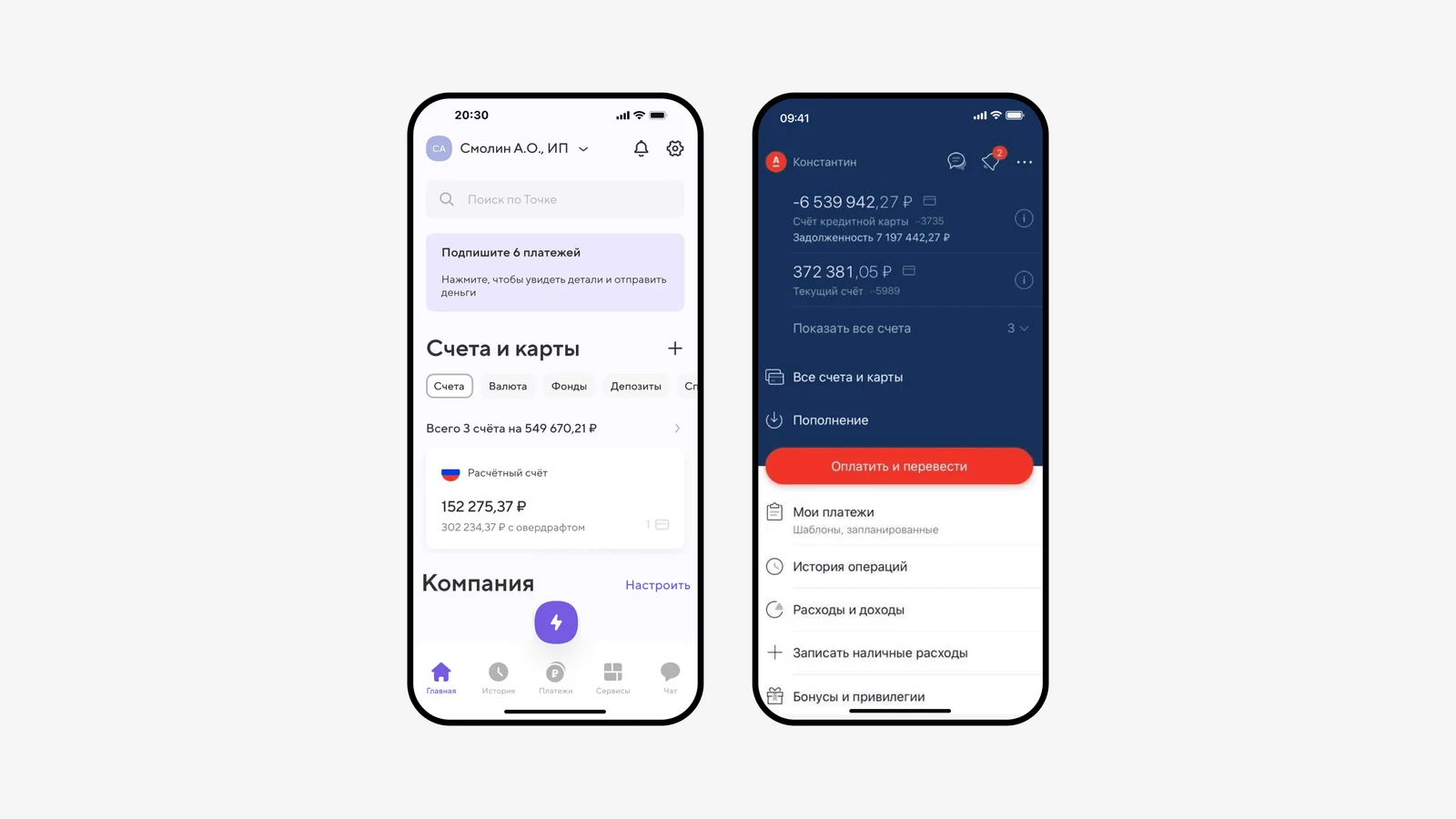
The process started with a simple step: updating the screen as-is to refresh the code and prepare for future feature development.
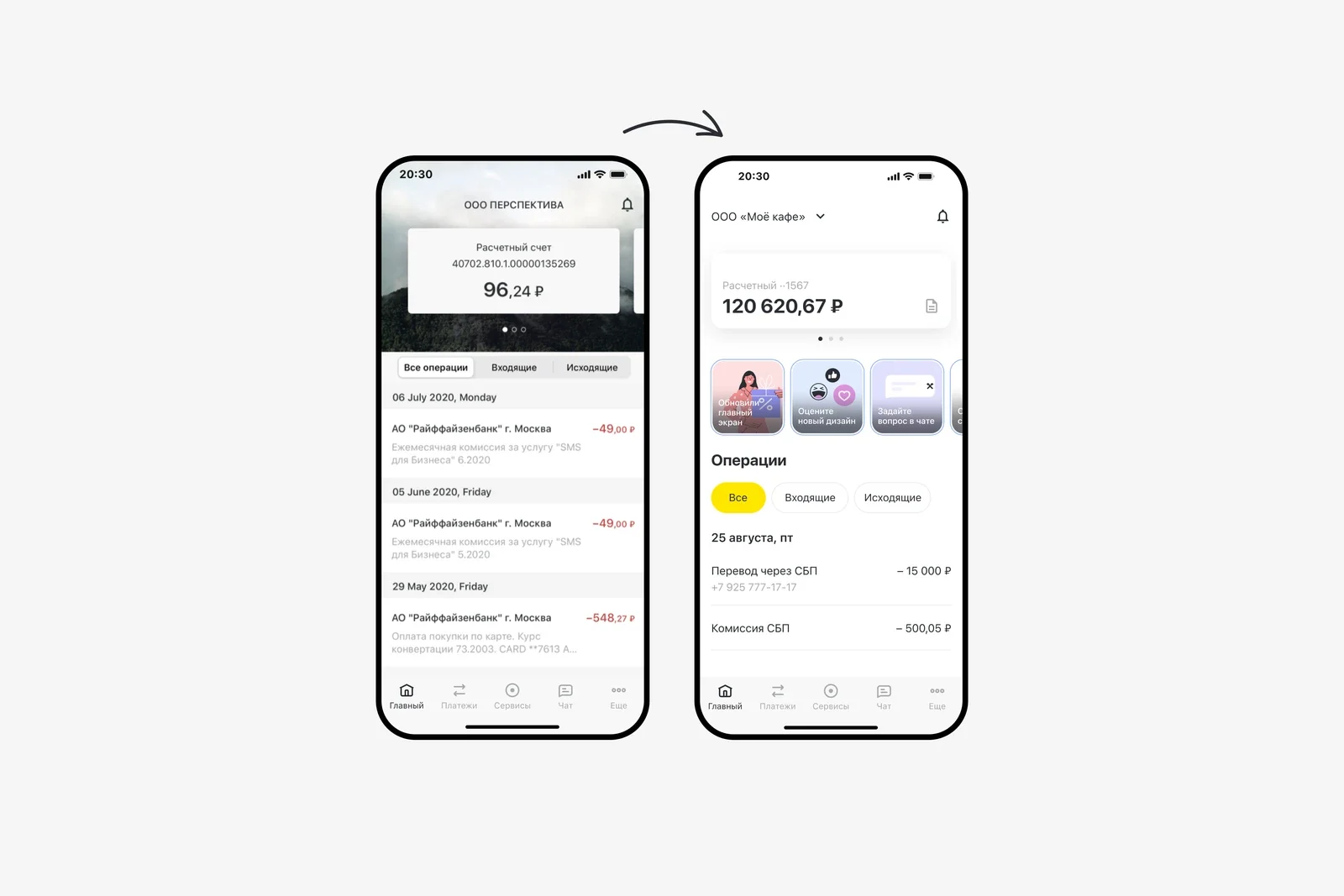
Horizontal scroll was replaced with a list, similar to the web version. Account sorting was aligned with the web version to make statement access more intuitive, and with new products coming, horizontal scroll was no longer scalable.
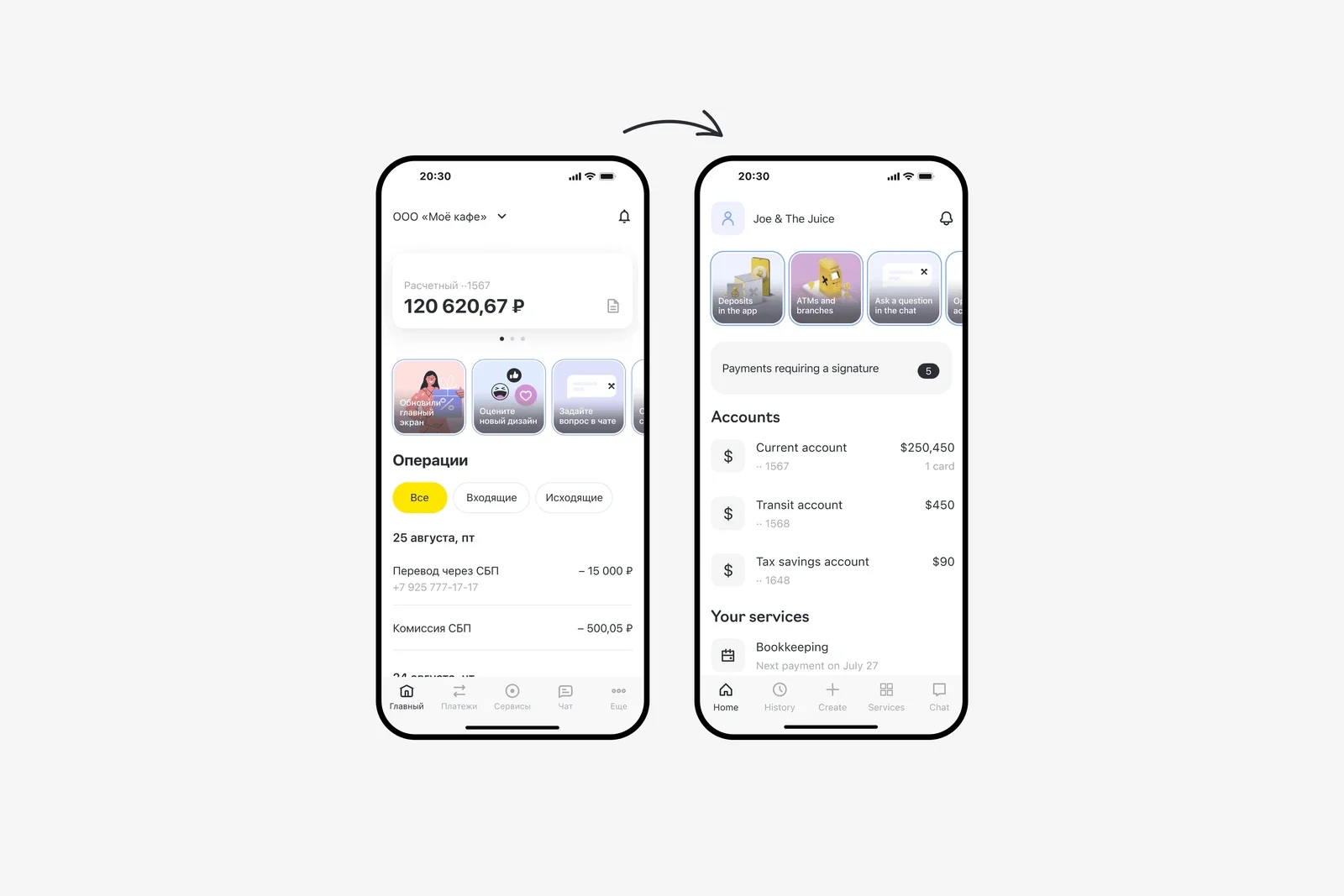
I merged duplicated histories into one History section and removed transactions from the Main screen.
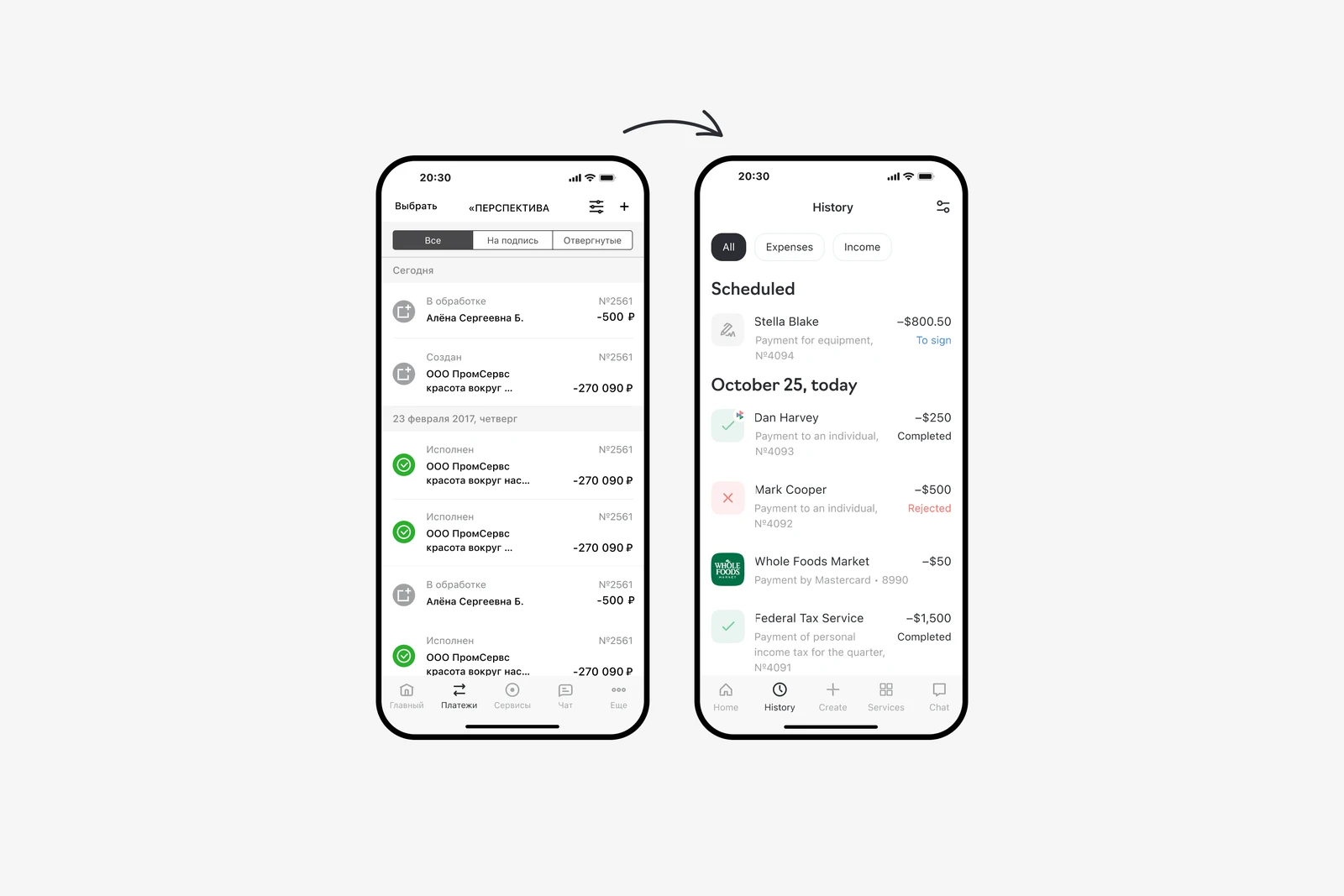
Users started to have a more consistent experience across the app, and in 2024 the B2C app also improved its design, making the apps even more cohesive.
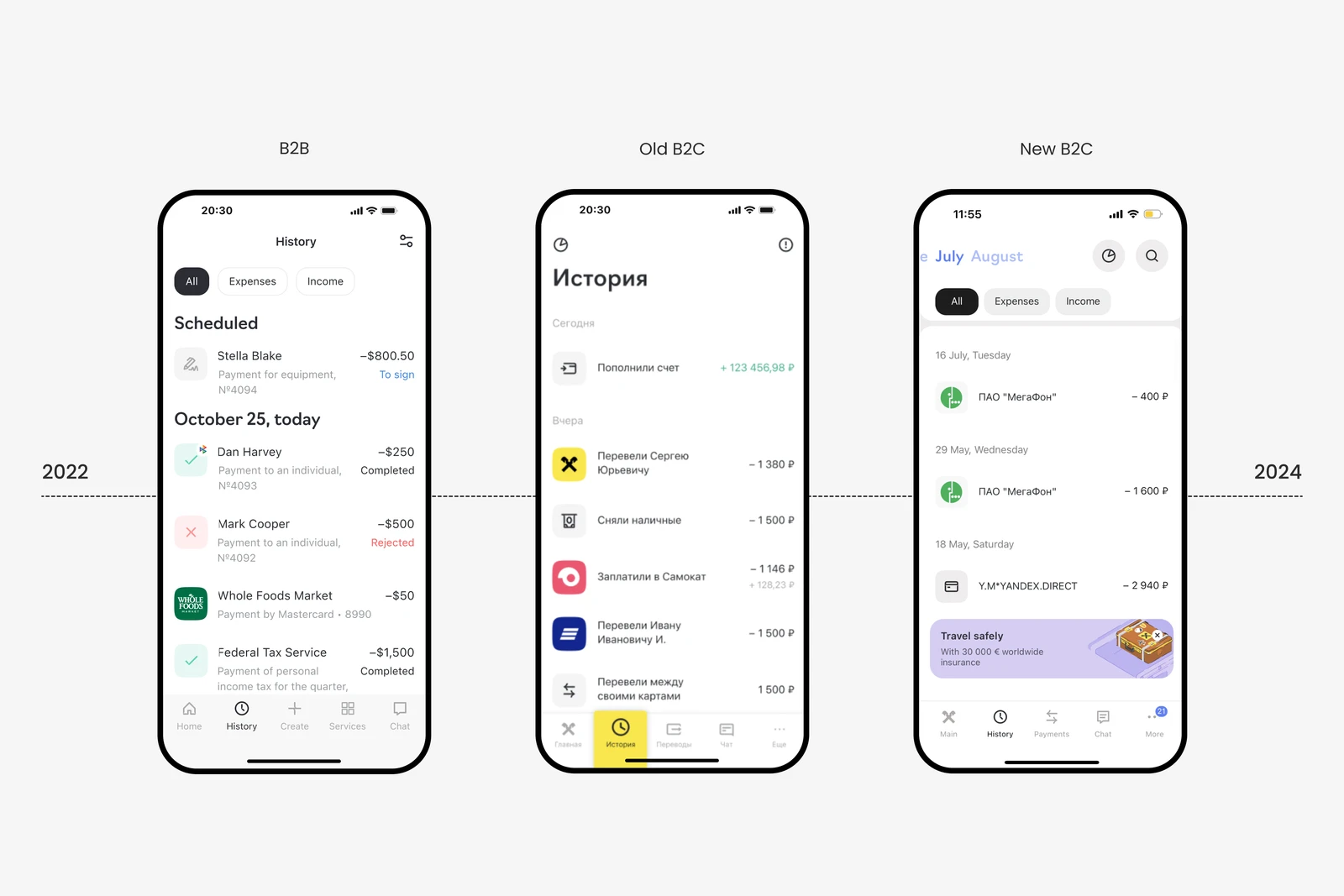
After the update, some users found it harder to find contractor payments among their card charges. This showed that major updates need more research and validation before they go live.
Next project · Raiffeisen Bank
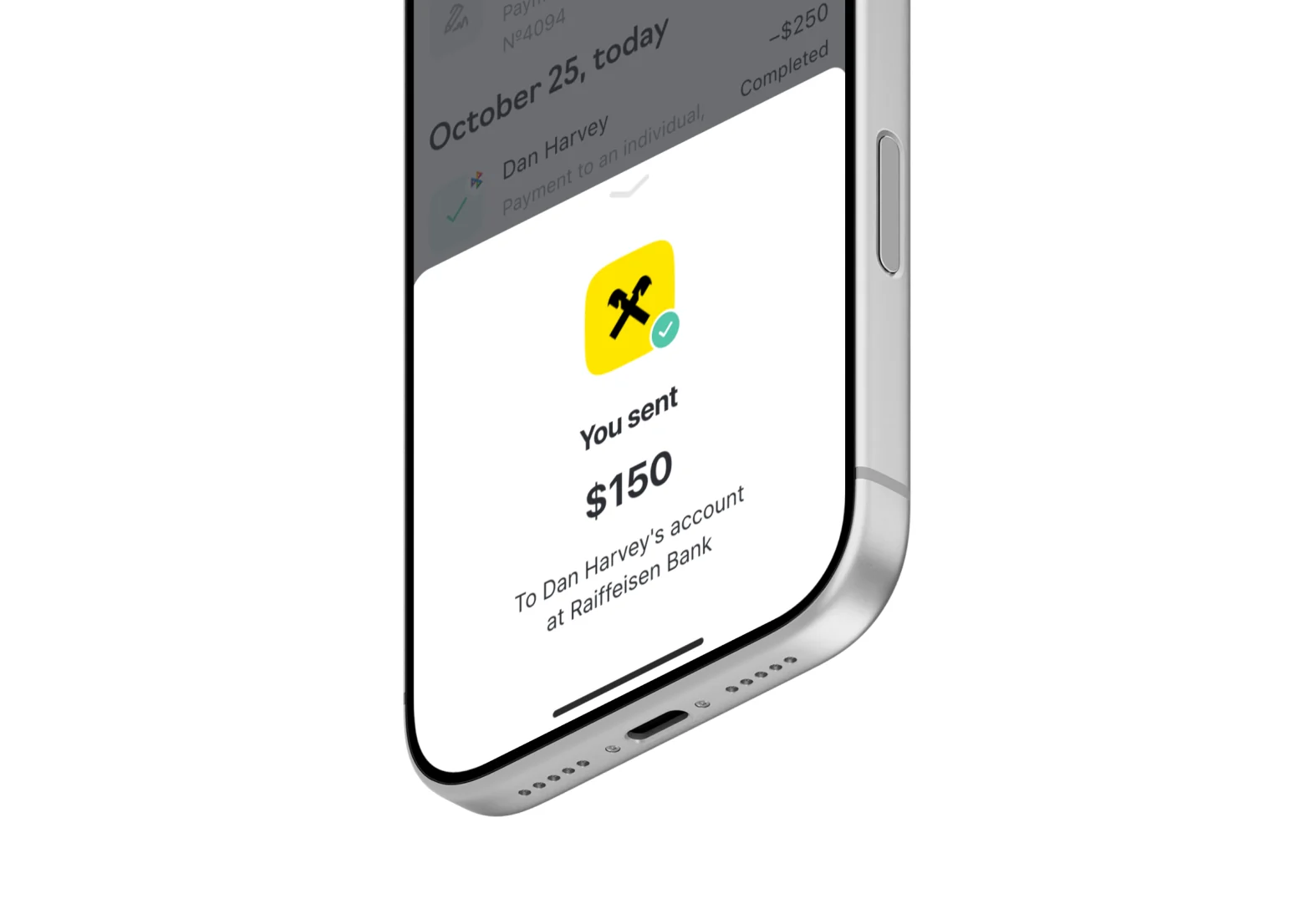
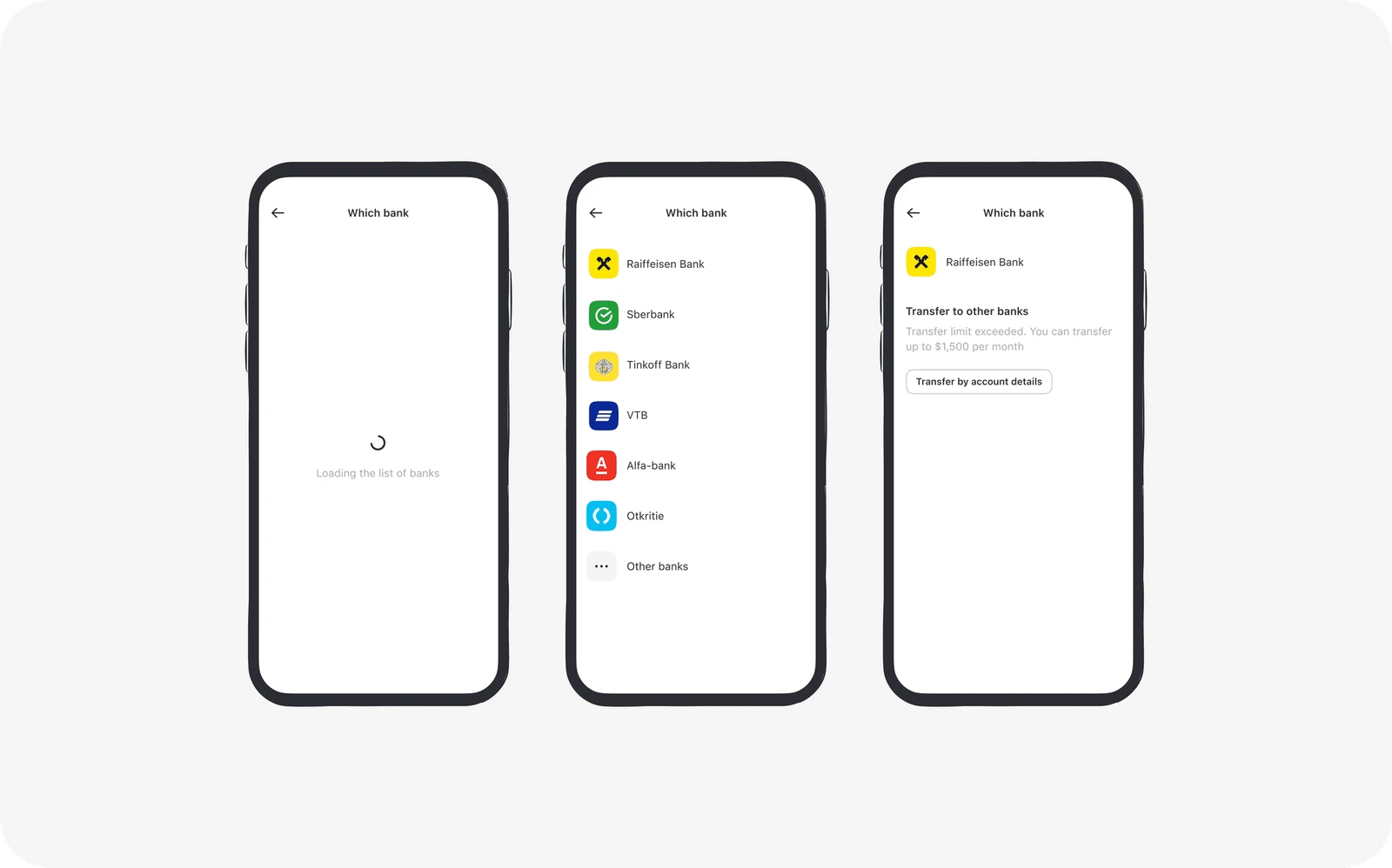
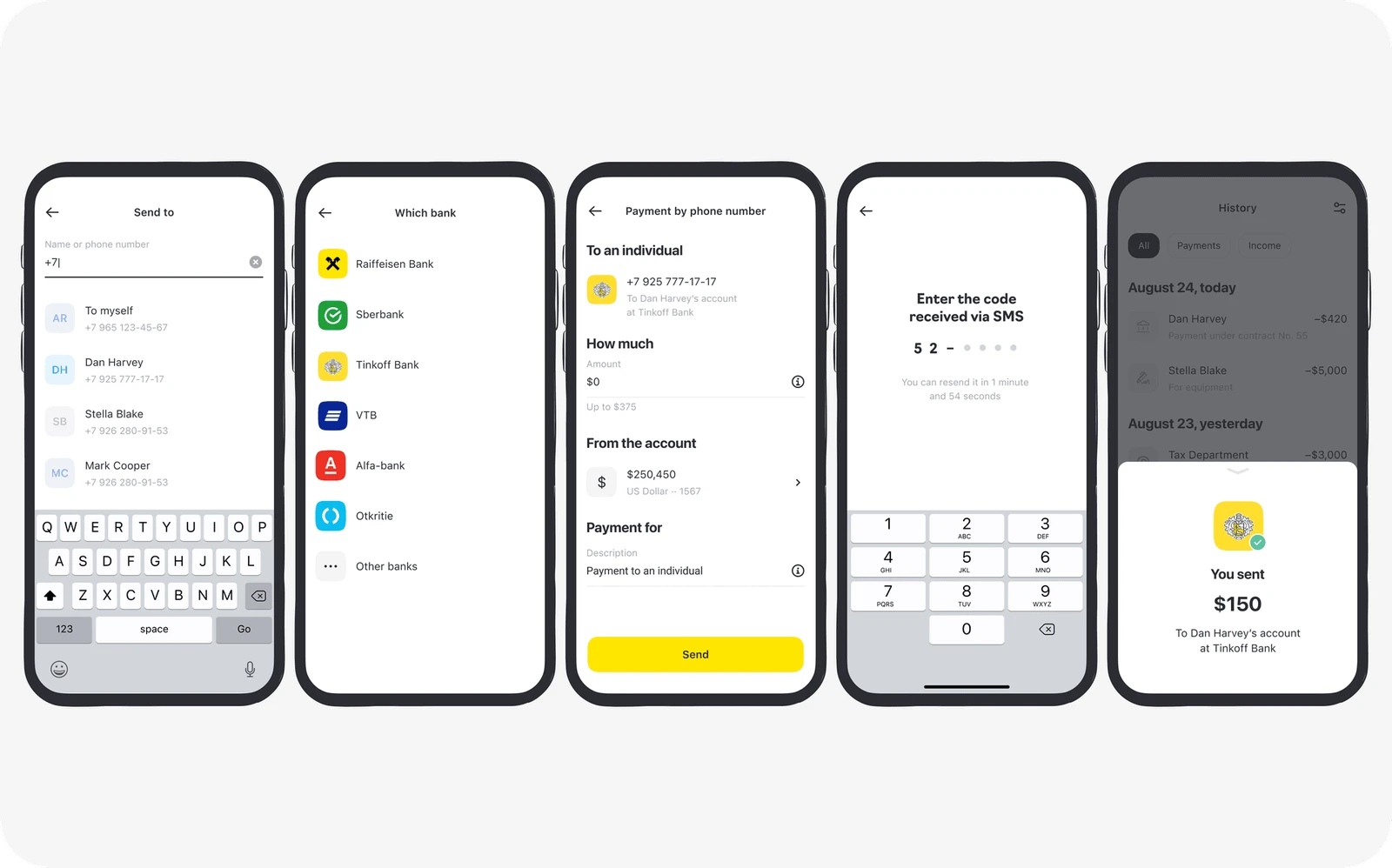
Business owners had to wait up to three days to send money. I designed a new instant transfer experience that enabled 24/7 payments in minutes.
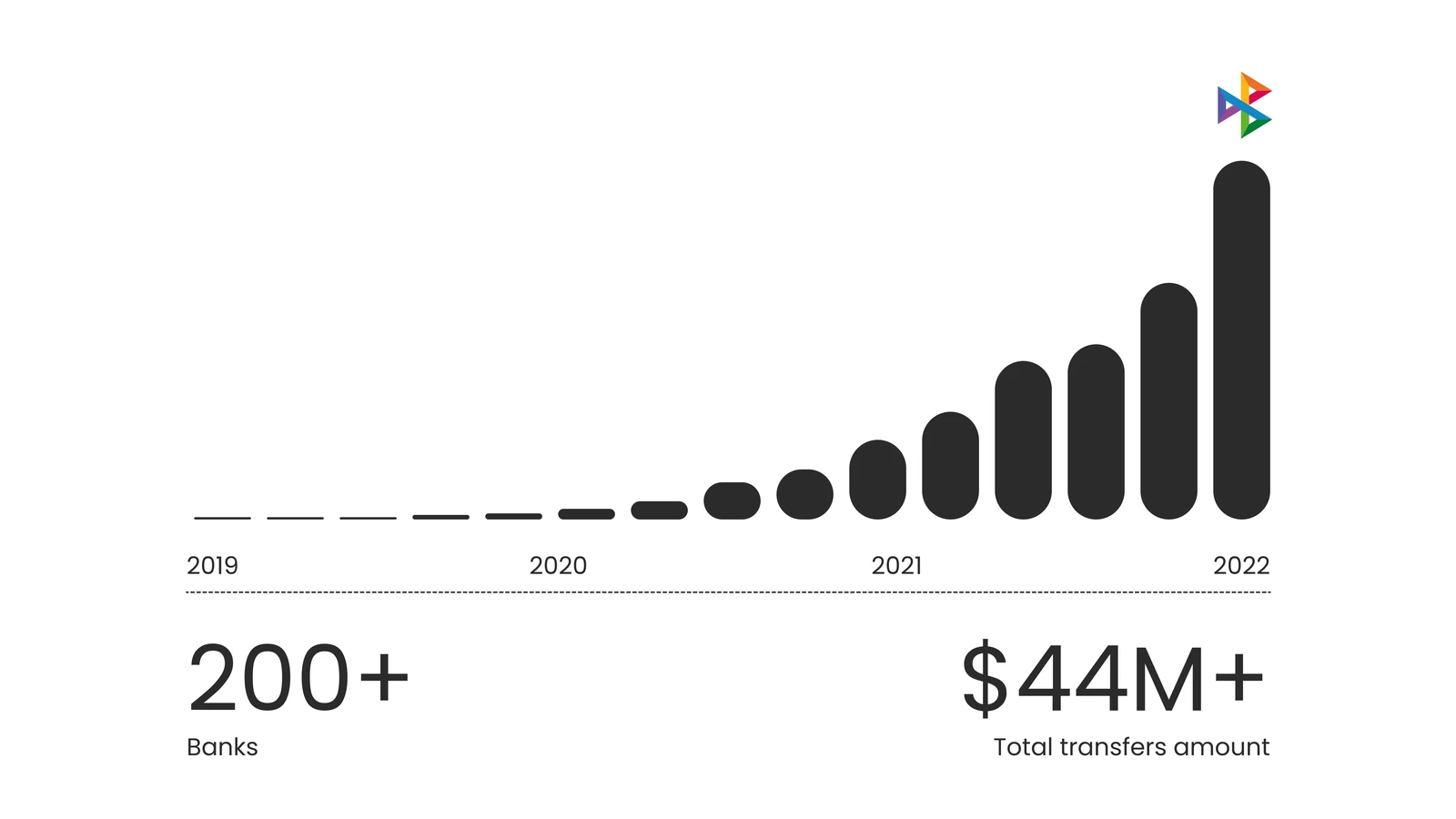
We looked at the existing solution in the B2C app and realized we could reuse it for business payments. Already integrated into Raiffeisen Bank's B2C app and growing fast since 2019, the tech was a natural fit for our B2B product.
Built on the national instant payment infrastructure, this technology enables 24/7 phone transfers across 200+ banks with 0% commission. The chart below illustrates the technology's rapid growth since 2019.
We also researched current solutions in the B2C market and found that everyone used the same technology for fast money transfers. So, we decided to reuse this technology for our B2B app.
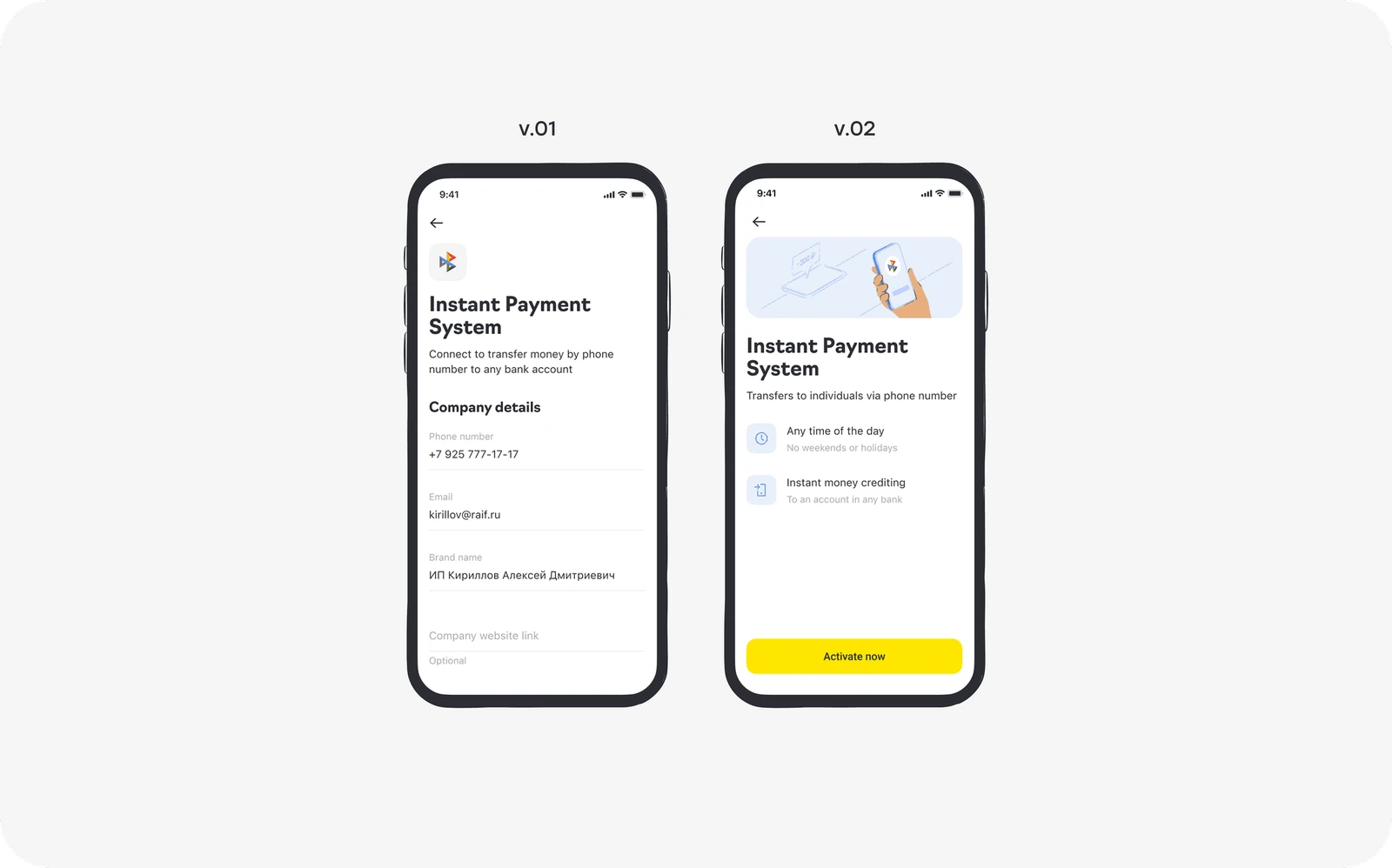
The first approach opened with a data-entry screen. Low activation showed that the setup asked for too much too soon, so I replaced it with a focused one-click activation landing.
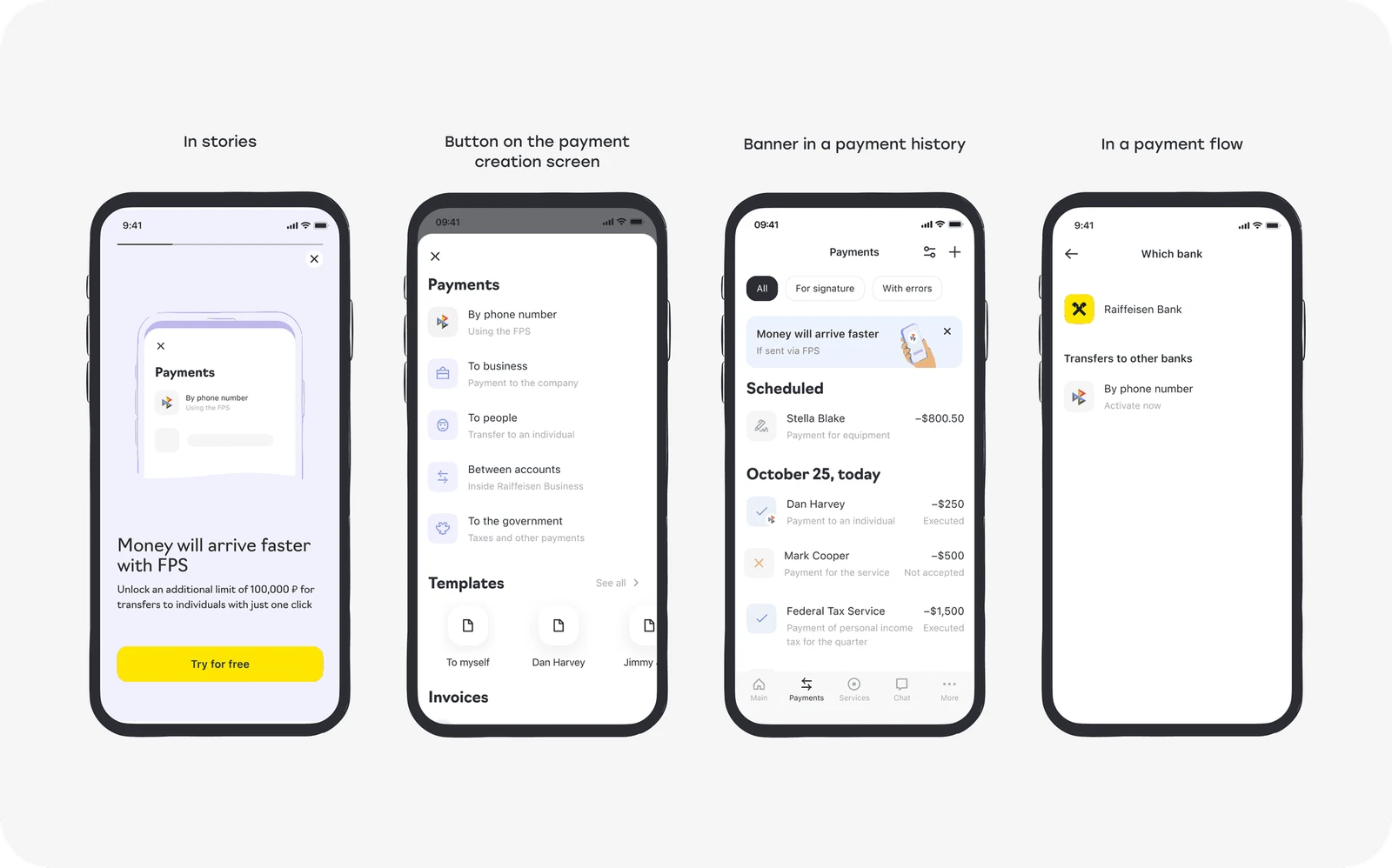
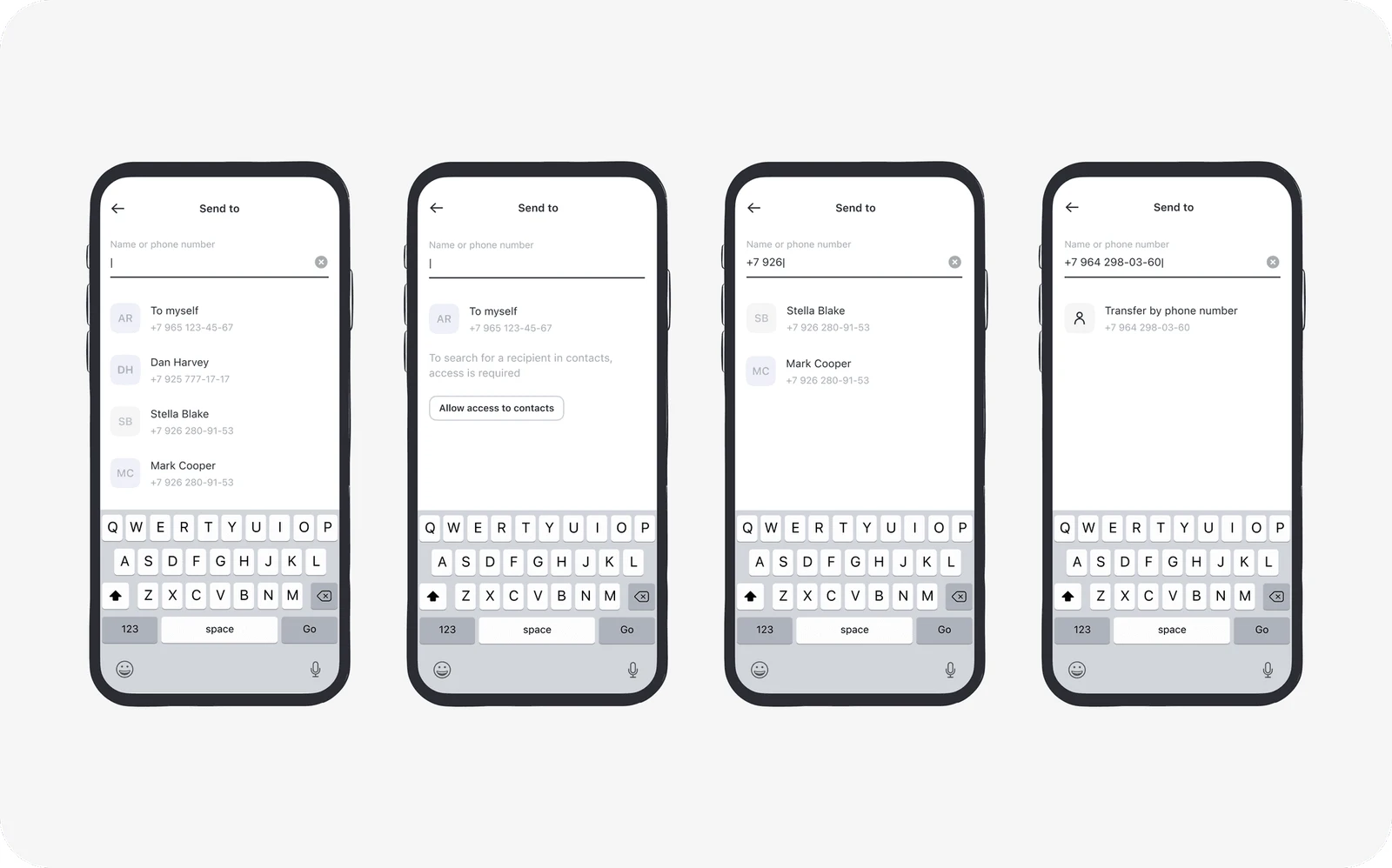
I integrated the phone contact list and prioritized the business owner's number, while keeping transfers to any recipient immediately accessible.
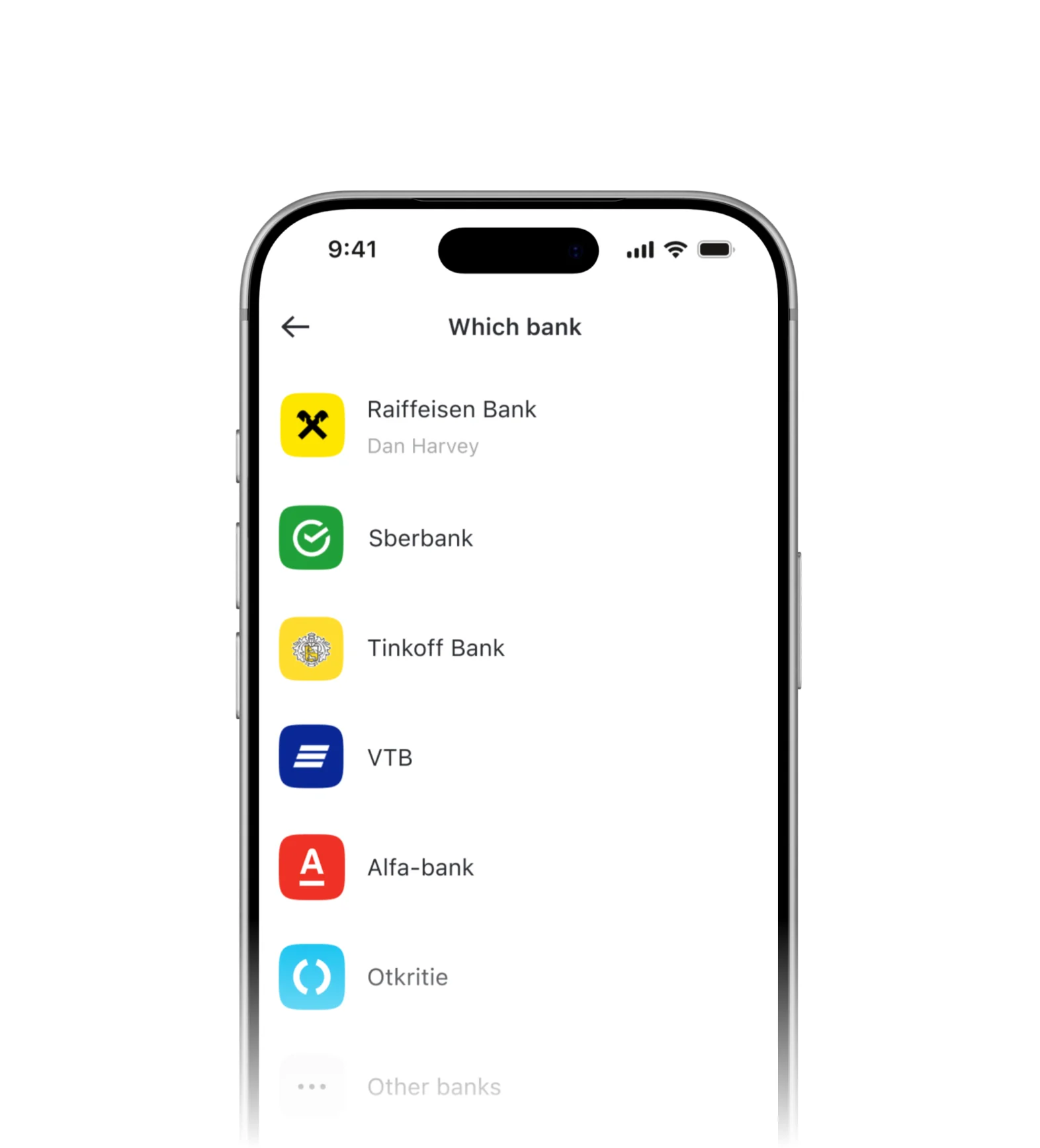
More than 200 banks were available. I surfaced the five most frequently used options and gave Raiffeisen Bank priority, reducing the effort required to find a destination.
Next project · inDrive
Serra
Health apps track sleep, heart rate and activity, but understanding what these numbers mean together takes effort. I designed Serra to bring them together in one health score, with personalised insights and goals that help users choose what to focus on next. Generative UI shapes the interface around each goal.
Accurate tracking still leaves a simple question unanswered: is today a good day or not? Sleep, HRV and activity appear as separate metrics. Users have to weigh them against each other to understand their overall condition and decide where to focus.
I benchmarked Oura, Apple Health, WHOOP and Strava, focusing on onboarding, first-use value and how each explains health data.

I mapped the journey from optional device pairing to a daily summary, insights, goal creation and progress tracking, through to Premium. The flow also covers missing health data, pairing failures and goals Serra cannot prepare.

Users can start with available iPhone activity data, without registration or a wearable. Pairing a device adds deeper sleep and heart-rate signals, so the experience grows with the data available.

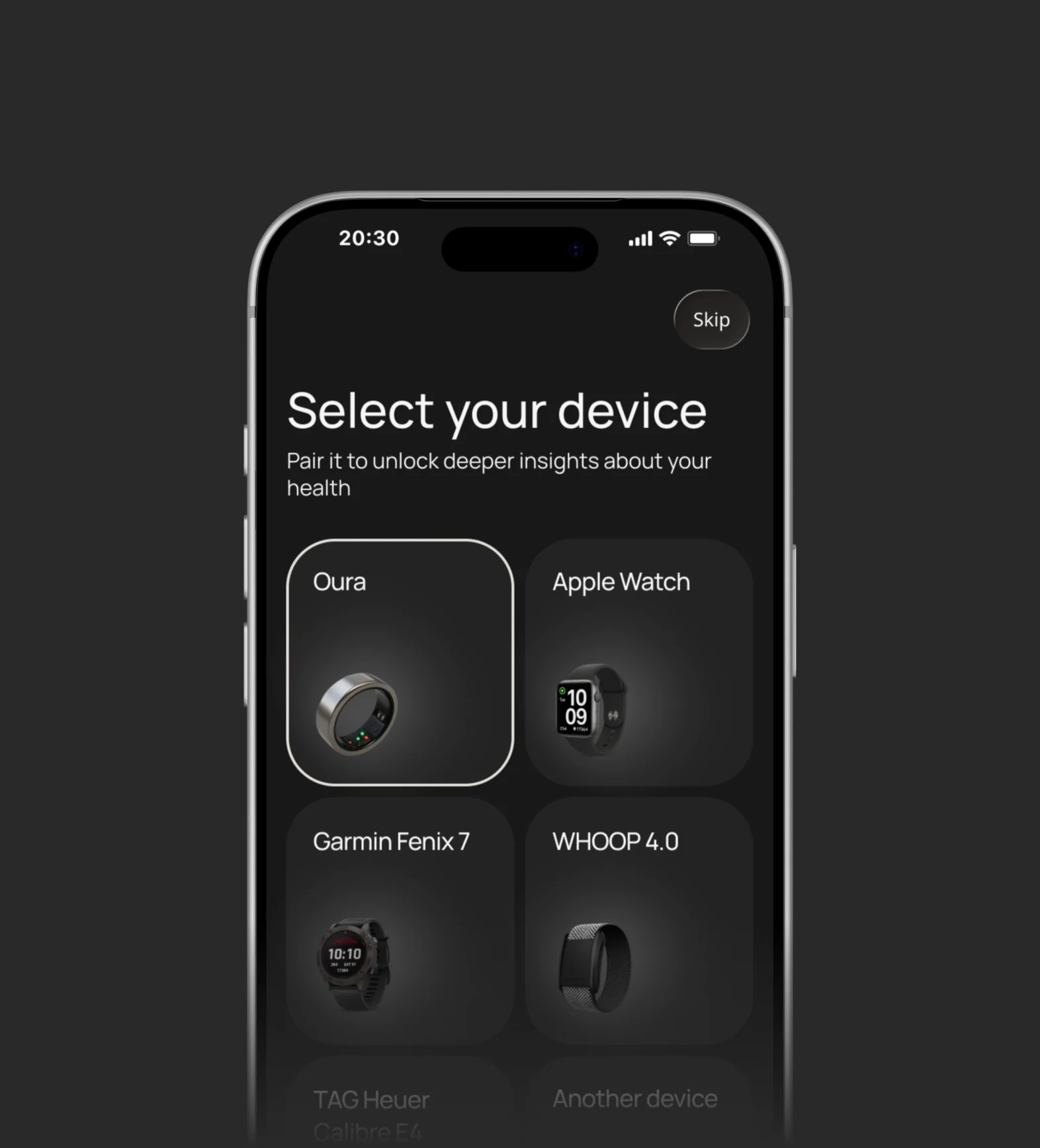
Users select their device and follow guided setup. They can skip pairing and start with available phone data, then connect a wearable later for deeper insights.


One vitality score brings available sleep, heart-rate and activity signals into focus. Large typography and colour-coded states with text labels make the daily picture easy to read. Plain-language AI insights explain what’s driving it, with full analytics one tap away.

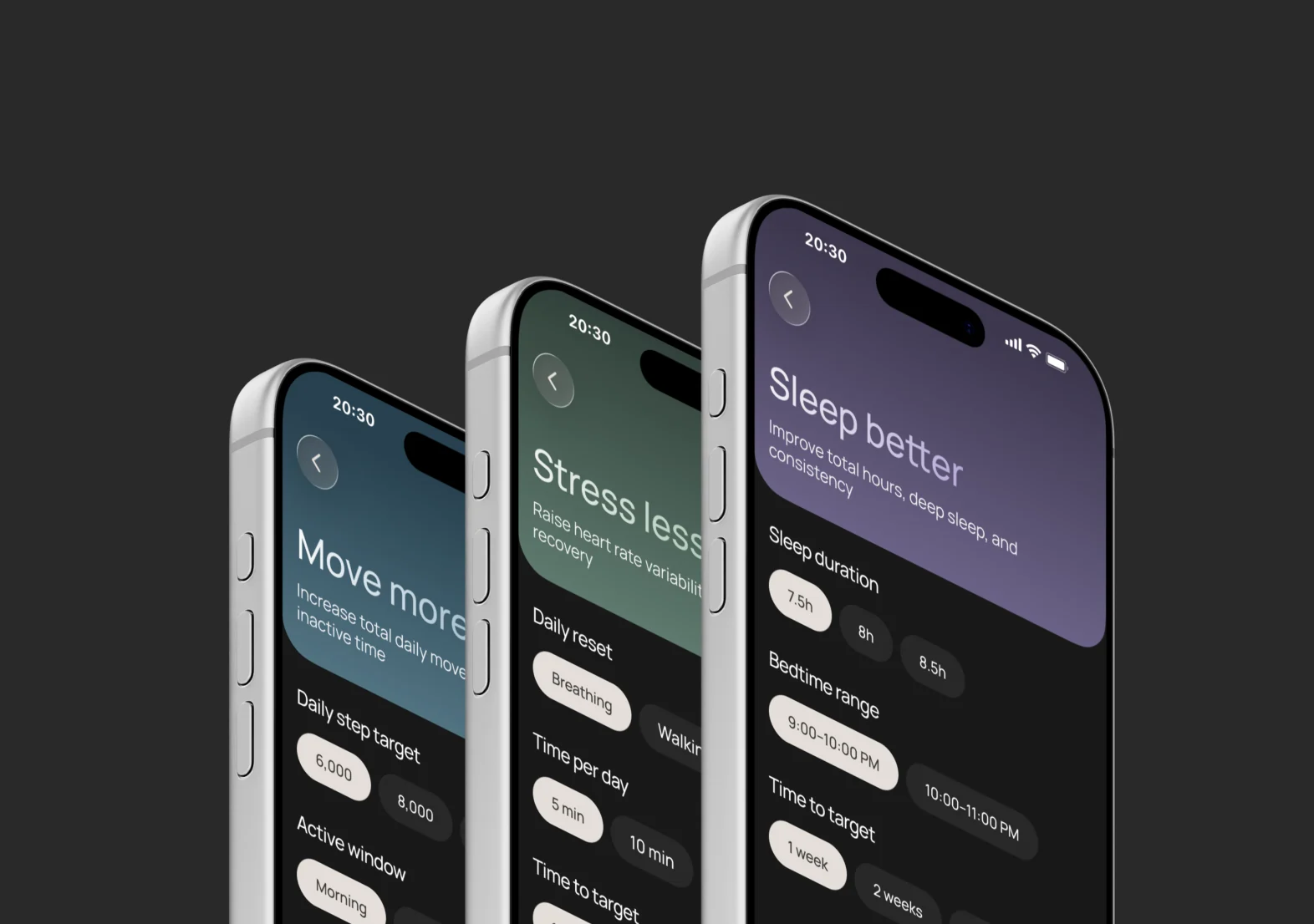
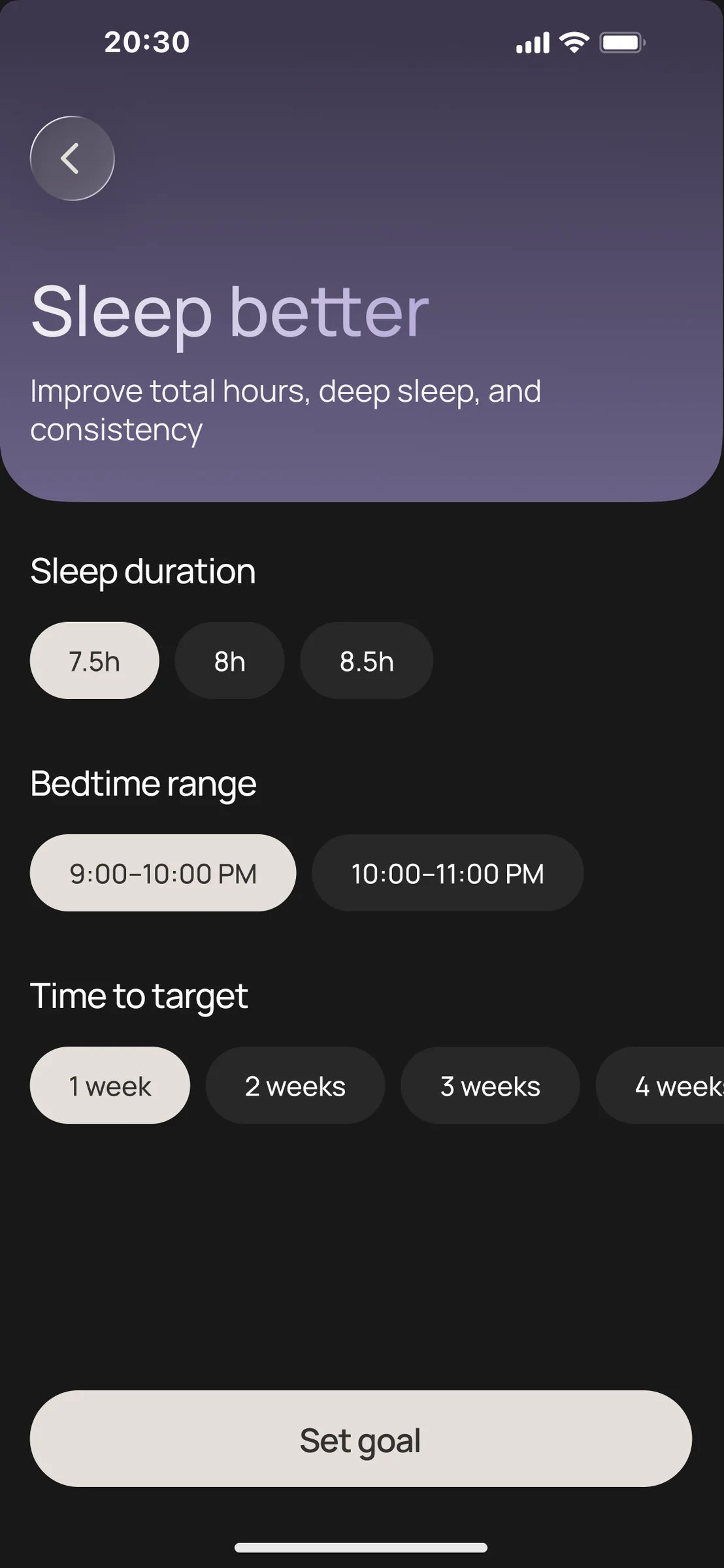
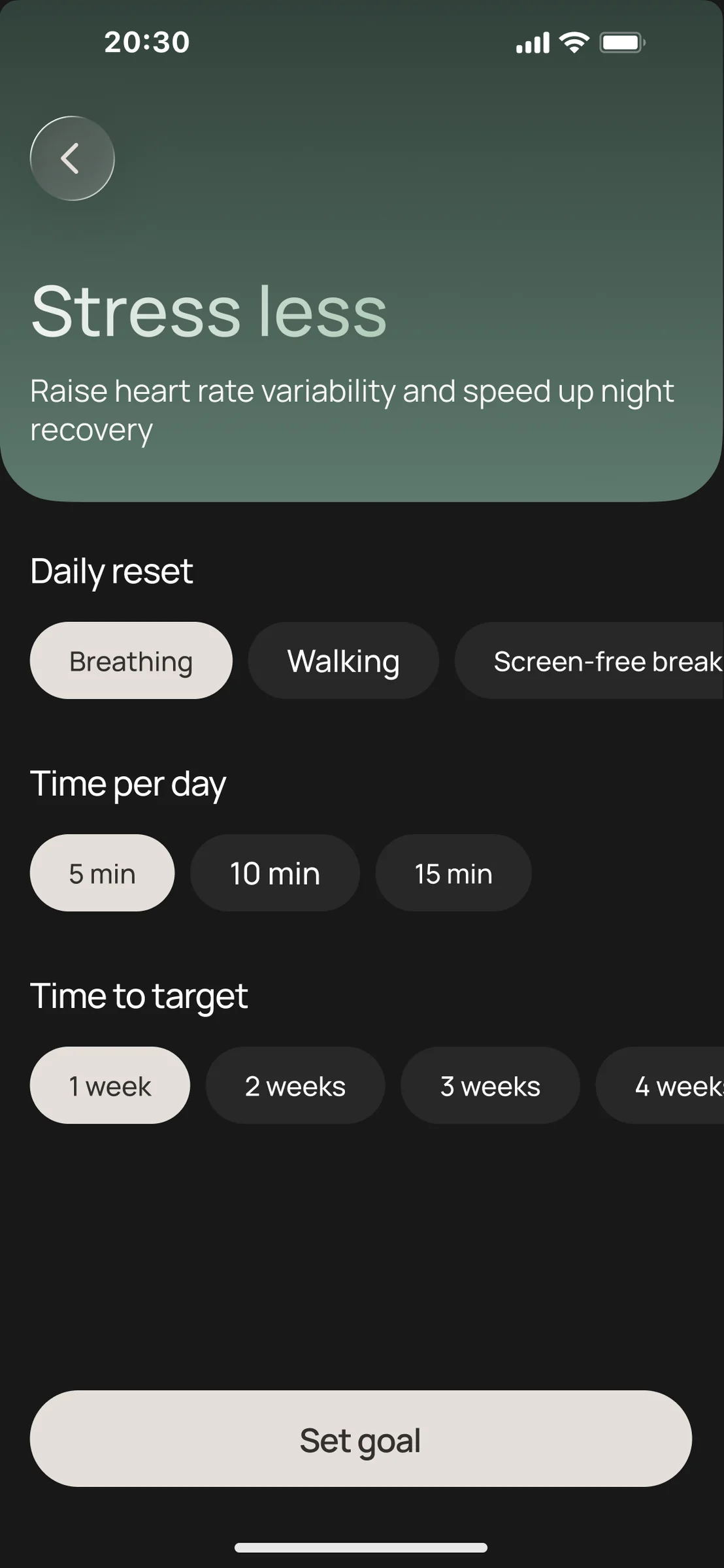
Serra uses health data to suggest goals for sleep, stress and movement. Each goal has its own controls and progress tracking, with adjustable targets and timeframes.
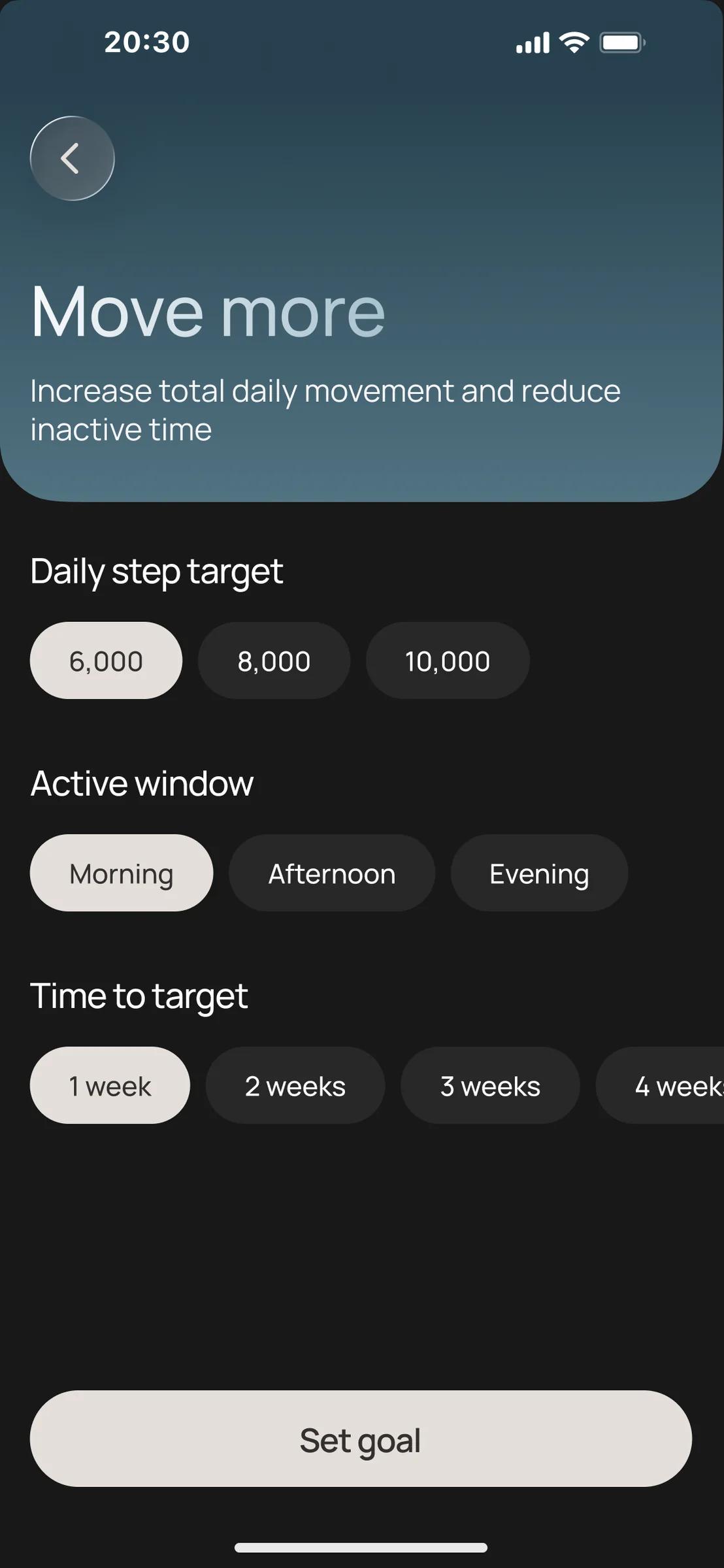

Serra sends timely reminders linked to each user's goals, helping them follow through on daily actions and stay on track.

A goal becomes part of the daily experience. The home screen keeps the target and daily results together, making progress easy to follow.


One tap opens the detail behind the score. Sleep trends, performance metrics and AI insights help users understand what is shaping their current state.

The proposed freemium model makes the first goal free. Premium adds continuous goal tracking, advanced AI insights and Health Club access. Subscriptions are the core revenue stream, with potential wearable partnerships introduced at goal completion.

Percentage of users acting on AI insight recommendations
Daily active users
Premium conversion rate
Percentage of new users who set their first goal
Percentage of new users achieving their first goal
Serra explores AI beyond a chat interface: a daily health summary leads to insights, goals and an interface shaped around them.